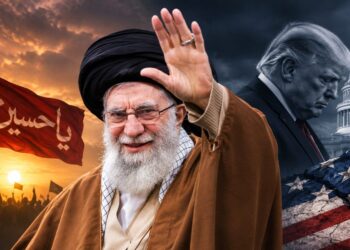

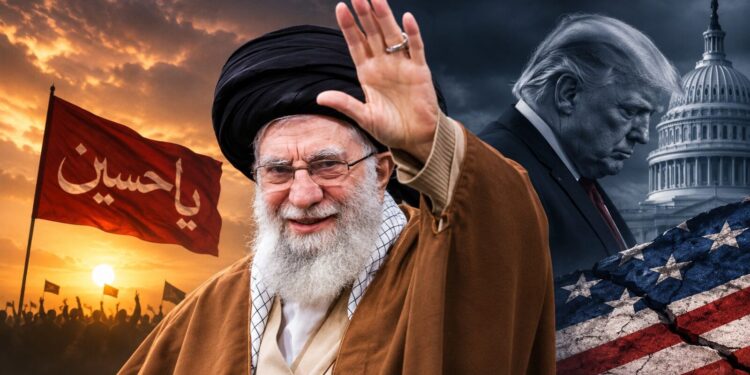
Donald Trump believed that assassinating Ayatollah Sayyid Ali Khamenei would break the Islamic Republic and secure American dominance over Iran. Eight months later, Iran remains standing, while the war has contributed to a historic electoral defeat for Trump’s Republican Party. Yet the deeper significance lies in Khamenei’s lifelong mission, rooted in the teachings of Imam Hussain (a): that sacrifice can achieve a victory far greater than anything attained through survival.
On 28 February 2026, Donald Trump launched a war against Iran that killed Ayatollah Sayyid Ali Khamenei, expecting that the elimination of the Islamic Republic’s highest authority would pave the way for its collapse. Eight months later, Trump’s Republican Party suffered a sweeping defeat in the American midterm elections, losing control of both chambers of Congress. The president himself acknowledged that the war had contributed to the result, telling The Wall Street Journal that “Iran was a piece of it”, although he insisted that he would make the same decision again.
The historical reversal is striking. Trump had sought to reshape Iran’s political future through overwhelming military force, yet the Islamic Republic survived while the economic consequences of the confrontation undermined his own political position. The president who encouraged regime change in Tehran now faces a Congress controlled by his opponents, with the war against Iran emerging as one of the central causes of his electoral setback. For those familiar with Ayatollah Khamenei’s political philosophy, however, the deeper significance of these events lies in a mission that began long before Trump’s presidency.
Khamenei’s mission and the school of Karbala
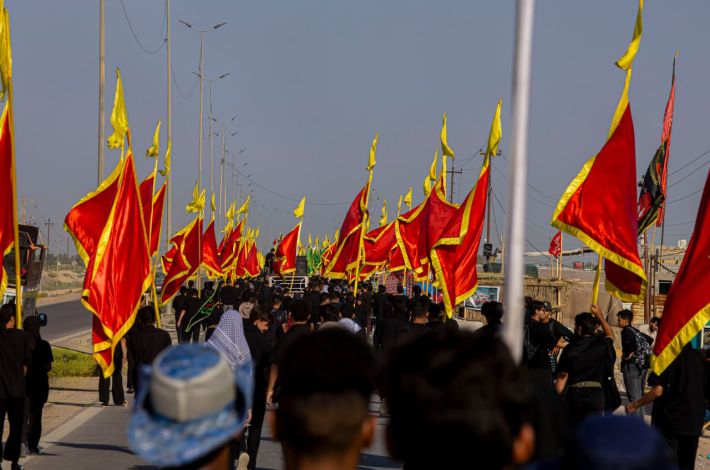
The uprising of Imam Hussain (a) in 680 CE established one of the most enduring principles of Islamic history: that victory cannot be measured through military superiority alone. Confronted by the overwhelming power of the Umayyad state, Imam Hussain (a) refused to legitimise Yazid’s rule, choosing to defend the moral foundations of Islam despite the consequences. His martyrdom at Karbala did not extinguish his mission, but transformed his stand into an enduring source of resistance against oppression, long after the authority responsible for his death had disappeared.
This understanding of Karbala profoundly shaped the Islamic Revolution under Imam Khomeini and subsequently Ayatollah Khamenei. For both leaders, Ashura was not simply a historical tragedy to be commemorated, but a living school of political responsibility, resistance and sacrifice. The principle that blood could triumph over the sword became central to their understanding of how an apparently weaker movement could confront a vastly more powerful adversary.
In a Friday sermon delivered in Tehran on 14 April 2000, Khamenei explained that the uprising of Imam Hussain (a) contained two possible outcomes. The first was political victory through the removal of Yazid’s authority and the establishment of reform. The second, if immediate victory proved impossible, was to preserve the message through martyrdom. Khamenei explained that the Imam would then convey his message through his blood, creating a voice that history could never silence. He argued that although the first objective had not been achieved, the second had been realised.
This philosophy informed Khamenei’s approach to American power throughout his leadership. After succeeding Imam Khomeini in 1989, he consolidated a political and military system intended to preserve Iran’s independence against a vastly superior adversary. Iran developed domestic defence industries, missile capabilities and regional relationships while maintaining its opposition to American domination and the Zionist occupation of Palestine. His strategic calculation was that Washington’s military superiority could be countered through endurance, deterrence and the capacity to impose costs upon any aggressor.
Khamenei’s objective was therefore greater than preserving his own leadership. He sought to establish a political order capable of maintaining its independence and continuing its resistance beyond the lifetime of any individual. His assassination would become the ultimate test of whether that mission had succeeded.
The assassination that became a strategic miscalculation
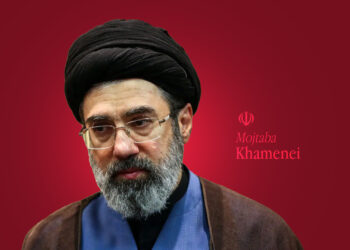
The American-Israeli strikes of 28 February targeted the highest levels of Iran’s political and military leadership. Trump openly encouraged Iranians to overthrow their government, anticipating that the killing of Khamenei and other senior officials would create the conditions for regime change. Instead, the country’s institutions continued functioning, its armed forces maintained their resistance, and Ayatollah Sayyid Mojtaba Khamenei succeeded his father as Leader.
Former US Marine Corps intelligence officer and UN weapons inspector Scott Ritter recognised the implications almost immediately. Writing on 1 March in an analysis entitled Regime Change, the Double-Edged Sword, Ritter argued that Washington had fundamentally misunderstood the religious significance of martyrdom within Shia Islam. Drawing upon the example of Imam Hussain (a), he maintained that Khamenei’s assassination could strengthen rather than destroy Iranian resistance, transforming the slain Leader into a symbol capable of mobilising the country against foreign aggression.
Ritter also examined Khamenei’s decision to remain at his residence despite the danger of assassination, interpreting his conduct through the tradition of sacrifice associated with Karbala. His assessment was that Washington had mistaken the killing of a leader for the destruction of the cause he represented. Significantly, Ritter warned on the first day of the war that Trump’s political future, including the approaching midterm elections, could be endangered by the confrontation he had initiated.
As the war continued, other prominent Western analysts reached similarly critical conclusions about Washington’s strategy. Professor John Mearsheimer, the University of Chicago political scientist, described the conflict as the greatest strategic blunder in American history. In his September essay The Mother of All Strategic Blunders, he argued that the United States had entered the war with a fundamentally mistaken theory of victory: that overwhelming air power and the elimination of Iran’s leadership would produce political collapse.
Mearsheimer identified Washington’s failure to achieve regime change, eliminate Iran’s missile capabilities or dismantle its regional relationships as evidence that military superiority had failed to translate into strategic success. American economist Professor Jeffrey Sachs, writing with researcher Sybil Fares, reached a related conclusion, arguing that the United States could not sustain the confrontation at acceptable military, financial and political cost. Their analysis emphasised Iran’s ability to disrupt regional energy infrastructure and international shipping, exposing vulnerabilities that Washington had underestimated.
Retired US Army colonel Douglas Macgregor likewise warned that Trump was becoming trapped in a conflict without a credible path to victory. By September, he was discussing the prospect of Republican losses in Congress as the war placed growing pressure upon the American economy. Professor Seyed Mohammad Marandi of the University of Tehran had similarly argued that Iran’s advantage lay not in matching American firepower, but in ensuring that continued aggression became economically and politically unsustainable for Washington.
These commentators approached the conflict from different political and intellectual perspectives, but their assessments converged on a fundamental problem: the United States possessed the means to inflict extraordinary destruction upon Iran, yet lacked the ability to guarantee its political submission. The resistance doctrine developed under Khamenei had survived his death and was imposing consequences upon the very power that had sought to destroy it.
The war reaches Washington
Iran’s ability to disrupt the Strait of Hormuz transformed the confrontation from a regional military campaign into an international economic crisis. Rising energy prices, disrupted shipping and mounting costs affected economies far beyond Iran’s borders, including that of the United States. For Trump, who had promised economic prosperity and an end to costly foreign wars, the conflict became an increasingly damaging political liability.
The war exposed a weakness in Washington’s approach to military intervention. American power depended not only upon its ability to conduct military operations overseas, but also upon the economic stability and political consent necessary to sustain them. When the consequences of the confrontation reached American households through higher fuel prices and wider economic uncertainty, the conflict became increasingly difficult to defend before an electorate already concerned about the cost of living.
On 3 November, those pressures formed part of the political environment in which voters delivered a sweeping defeat to the Republican Party. Democrats secured control of both chambers of Congress, with the results reflecting dissatisfaction over inflation, domestic policies and the prolonged confrontation with Iran. A Fox News survey conducted before the elections found that 74 per cent of respondents regarded the war as either a crucial or major factor in their congressional voting decisions.
Trump acknowledged the connection, while Vice-President JD Vance was considerably more direct, declaring that the war was the reason Republicans had lost. In Tehran, the results were received as evidence that Iranian resistance had imposed political consequences upon Washington. Iranian Parliament Speaker Mohammad Bagher Ghalibaf interpreted the outcome as a rejection of the conflict, whether motivated by opposition to the war itself or its economic consequences.
The electoral defeat cannot be attributed exclusively to Iran, nor does it establish that Tehran engineered the outcome. Nevertheless, it demonstrates how an unresolved foreign war can undermine the domestic political authority of the government responsible for launching it. Trump had sought to impose a new political order upon Iran, yet the confrontation had helped transform the balance of power within Washington itself.
The implications extend beyond one American president. Despite its overwhelming military superiority, the United States has struggled to secure the political objectives for which it entered the war, while the costs of maintaining its regional dominance have increasingly affected its own interests. The American empire has not collapsed, but the confrontation has exposed the limitations of a global power whose military strength no longer guarantees the political outcomes it seeks.
The victory that Trump handed Khamenei
Ayatollah Khamenei did not live to witness Trump’s midterm defeat, but the political and strategic system he spent decades developing survived the attempt to destroy it. His assassination failed to produce the collapse Washington anticipated, while the continuation of Iranian resistance contributed to a confrontation whose economic and political consequences eventually reached American voters.
The significance of this outcome is inseparable from the religious philosophy that shaped Khamenei’s life. In his 1987 address to the United Nations General Assembly, then-President Khamenei invoked the principle of blood overcoming the sword in describing the Iranian Revolution’s struggle against the heavily armed government of the Shah. It was a principle drawn from the religious tradition of Karbala, in which the sacrifice of Imam Hussain (a) preserved a mission whose historical significance far outlived the authority responsible for his martyrdom.
There is no evidence that Khamenei planned his own assassination or foresaw the precise political consequences that followed. Yet his life’s work ensured that the Islamic Republic was not dependent entirely upon his personal survival. The institutions he consolidated, the strategic capabilities developed under his leadership and the convictions he championed continued beyond his death. For his followers, this endurance represents the fulfilment of a central lesson of Karbala: that the sacrifice of a leader can give his cause a historical force greater than his own lifetime.
The confrontation remains unresolved, and the ultimate course of American power in the region is still being contested. But Trump’s attempt to eliminate Iran’s leadership has failed to extinguish the mission Khamenei defended, while the resulting war has contributed to one of the most serious political setbacks of his presidency.
Trump ended Khamenei’s life, but he could not end the mission to which Khamenei had devoted it. In killing him, Trump sought to secure his defeat, but instead handed him a far greater victory — the victory of martyrdom, rooted in the legacy of Imam Hussain (a), where death does not extinguish a cause, but grants it a life and power far beyond that of its leader.