
A change of prime minister, not of trust
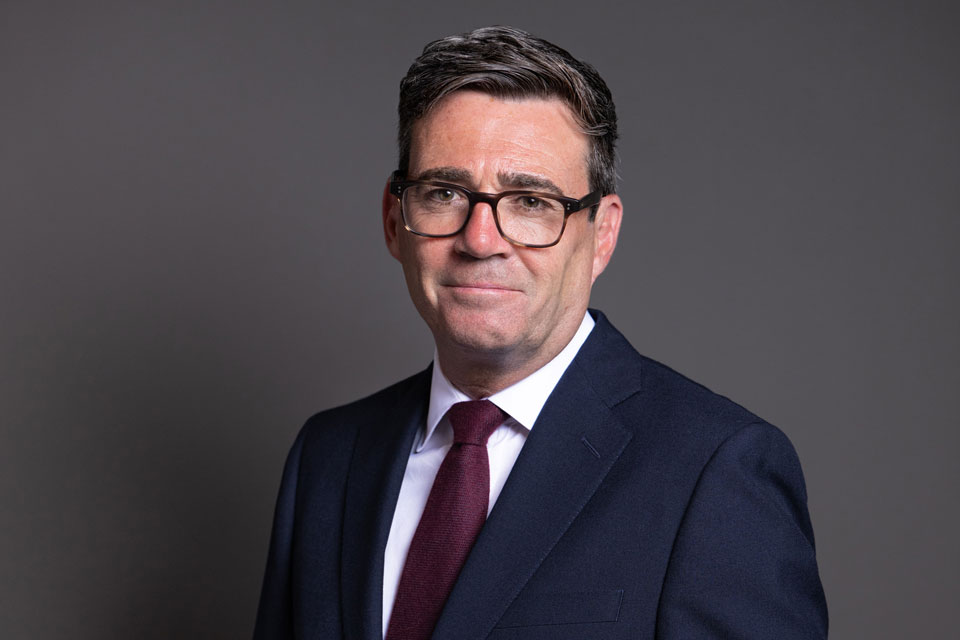
Andy Burnham became Britain’s prime minister on Monday, taking power after Sir Keir Starmer resigned under pressure from more than 95 rebel Labour MPs. The Burnham Labour Muslim vote question is the one the succession has not settled: whether Labour will change course on Gaza, or simply change the person delivering the same policy.
The scale of that question is set by the numbers Burnham inherits. Labour’s support among Muslim voters fell from around 80% in 2019 to roughly 60% in 2024, and by April 2026 stood at just 33%, according to polling reported by Muslim Network TV. Three in five Muslim voters said they would back an independent candidate to keep Labour out. Five sitting Labour MPs lost their seats to pro-Gaza independents in 2024, concentrated in the 21 constituencies where Muslims make up more than 30% of the population. That collapse, not Burnham’s own biography, is the material fact shaping his premiership.
Who Burnham is
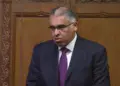
Burnham has been a Labour MP on and off since 2001, serving as Health Secretary under Gordon Brown before leaving Westminster in 2017 to become Mayor of Greater Manchester. He returned to Parliament in June 2026 via a by-election win in Makerfield and was confirmed as Labour leader unopposed on 17 July, the only candidate to stand once Starmer was forced out.
His record on Gaza and Israel is mixed rather than fixed. He voted for the Iraq War in 2003 and later called it, in his 2024 book, his “worst experience in parliament,” saying he could not justify “the rage, the rhetoric, the haste” of the invasion. He joined Labour Friends of Israel in 2015, told that year’s leadership contest his first foreign visit as leader would be to Israel, and opposed the boycott, divestment and sanctions movement as “spiteful.” He has also called West Bank settlements “illegal and immoral” and, alongside London Mayor Sadiq Khan and Scottish Labour leader Anas Sarwar, called for a Gaza ceasefire in October 2023.
As Greater Manchester Mayor after the 2017 Manchester Arena bombing, Burnham said publicly that the bomber “was a terrorist, not a Muslim,” that he “does not represent the Muslim community,” and pushed for the Prevent counter-extremism strategy to be scrapped, calling it “toxic” and something that left Muslims feeling “spied upon.” Hammad Khan, president of Manchester Central Mosque and a lifelong Labour supporter, credits Burnham with securing PPE for mosques during the pandemic and with practical support during the 2024 riots. “I found that he was very helpful, he was very eager to understand the problems,” Khan told Hyphen. Burnham, he said, “does not play into any divisive politics.”
That record is the strongest evidence that Burnham’s engagement with Muslim communities predates any political calculation tied to this month’s leadership contest. It should not be dismissed. But a mayoral record on community relations is not the same as a prime ministerial record on foreign policy, and it is the latter that will determine whether Labour’s Muslim vote returns.
Who has his ear
On taking office, Burnham kept Shabana Mahmood, a Muslim MP, as Home Secretary, and removed six Starmer-era ministers, including Rachel Reeves and David Lammy. But the post that most concentrates power in Downing Street, chief of staff, has gone to James Purnell, a former Blair and Brown-era minister who chaired Labour Friends of Israel for two years and visited Israel in 2002 as a guest of the organisation.
The contrast is instructive. Mahmood’s brief as Home Secretary is immigration enforcement, not Gaza policy, and commentary in UnHerd has already framed her as doing “Burnham’s dirty work” on migration rather than acting as a Muslim-community voice inside Cabinet. Purnell, by contrast, sits at the centre of every decision that reaches the prime minister’s desk. No Muslim organisation has yet issued a formal reaction to his appointment. But set against each other, the two appointments answer the question of influence more clearly than any speech could: a Muslim minister running the department Muslim communities most fear, and a former pro-Israel lobby chair running Downing Street.
Gaza, Iran and Lebanon: rhetoric ahead of policy
On 16 July, the day before he was confirmed as leader, Burnham posted a video apologising that Labour “didn’t get it right” at the start of Israel’s military action in Gaza, calling it “a scar on our conscience” and backing tighter restrictions on arms licences “to make sure no British bombs or bullets can be used by the IDF in Gaza or the West Bank.” The Labour Muslim Network called it “a huge and important intervention.” The Muslim Vote, the campaign group that organised much of the 2024 independent vote, was not persuaded, saying his position remains “too unclear” to assess and demanding an “immediate arms embargo” and a “clean and decisive break” from Starmer-era policy.
The gap between the two responses matters. Burnham has declined to call Israel’s actions in Gaza a genocide, citing “growing evidence” of war crimes but arguing formal determination should rest with international courts. More concretely, the exemption allowing F-35 fighter jet components to keep reaching Israel, maintained by Starmer and Lammy even as roughly 30 of 350 other arms licences were suspended in September 2025 over the risk of international humanitarian law violations, remains untouched. The UK High Court has already ruled the exemption lawful, and nothing in Burnham’s public statements suggests he intends to end it.
Analysts at The Media Line expect caution and continuity rather than a new direction, with a real risk of friction with Washington if the Trump administration seeks British involvement in any action against Iran. On Iran, Lebanon and the wider region, Burnham has said almost nothing, a silence that itself signals no settled position, not a hidden one.
What changes, and what does not
Burnham’s premiership begins with warmer language than Starmer’s ever offered British Muslims, and a personal record in Manchester that gives that language some credibility. But warmer language has not moved the F-35 exemption, has not produced a position on Iran or Lebanon, and has not stopped the man running Downing Street from being a former chair of Labour Friends of Israel. The Muslim Vote’s verdict, delivered before Burnham had finished naming his Cabinet, still stands: the change of leader has not yet produced the “clean and decisive break” that would bring Muslim voters back to Labour.