
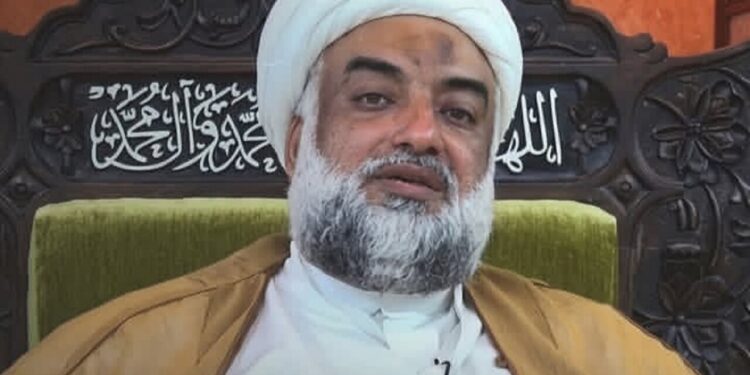
A Bahraini court has sentenced prominent Shia cleric Sheikh Abdulnabi al-Nashaba to one year in prison and ordered the confiscation of his mobile phone, amid continuing concerns over the treatment of Shia religious figures in the Gulf kingdom.
The sentence was issued on Wednesday, 9 September, following Sheikh al-Nashaba’s arrest the previous month. Reports said security forces raided his home in Madinat al-Zahra on 19 August before taking him into custody.
His prosecution comes against a longstanding backdrop of restrictions affecting Bahrain’s Shia community, including the questioning, detention and prosecution of clerics over sermons, religious gatherings and public expression.
The Bahrain Institute for Rights and Democracy (BIRD), a London-based rights organisation which closely monitors developments in the kingdom, has repeatedly warned of intensifying repression.
In April 2026, following a wave of prosecutions and citizenship revocations, BIRD’s director of advocacy, Sayed Ahmed Alwadaei, warned: “This marks the beginning of a dangerous era of repression, with consequences that will echo for generations.”
BIRD also reported in June, alongside Human Rights Watch, that Bahrain had revoked the citizenship of 69 people, including children and infants, all of whom were Shia Muslims of Iranian heritage. Human Rights Watch researcher Niku Jafarnia said Bahraini authorities had “long discriminated against the country’s Shia majority population.”
The concerns reflect a much longer pattern. Rights organisations have documented restrictions affecting Shia religious life, political participation and access to state institutions, as well as the prosecution of clerics and preachers over sermons and religious activities.
Bahrain’s Shia community has faced particularly intense scrutiny since the 2011 uprising, when security forces suppressed mass demonstrations demanding political reform. In the years since, prominent opposition societies have been dissolved, activists imprisoned and Shia religious institutions subjected to repeated restrictions.
Sheikh al-Nashaba’s sentence is therefore being viewed by Bahraini activists as another case within a broader struggle over religious freedom and Shia communal life in the kingdom.
Bahraini authorities reject accusations of sectarian discrimination and maintain that prosecutions are conducted under domestic law. Rights organisations, however, continue to document restrictions affecting Shia political, religious and civil life.
The latest sentence has prompted renewed calls for Sheikh al-Nashaba’s release and for an end to the prosecution of Shia scholars and preachers over their religious and community activities.