
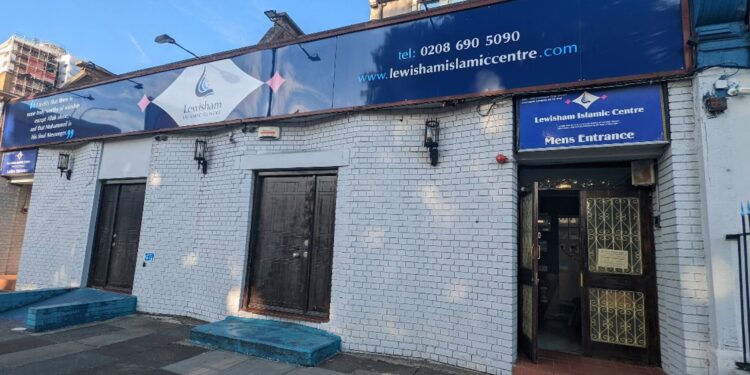
Lewisham Islamic Centre has challenged the charity regulator over its scrutiny of sermons addressing Palestine, raising fresh concerns about interference in Muslim religious expression.
Lewisham Islamic Centre has publicly rejected an official warning issued by the Charity Commission over sermons addressing Palestine, accusing the regulator of overstepping its authority and interfering in legitimate religious expression.
The dispute, reported by Al Jazeera on 12 November, follows a warning issued on 20 October 2026 concerning sermons delivered at the south-east London mosque in October 2023 and August 2024.
The Charity Commission raised concerns about language it considered inflammatory and divisive, alongside questions about the charity’s governance and oversight of religious activities. The sermons included criticism of Zionism, expressions of solidarity with Palestinians and allegations concerning Zionist influence over anti-Muslim unrest in Britain.
Rather than accepting the findings, Lewisham Islamic Centre challenged the regulator’s interpretation of its responsibilities, arguing that discussing the suffering of Palestinians falls within the legitimate religious and moral duties of Muslim institutions.
Mosque challenges regulatory interference
In a statement published on 11 November, Lewisham Islamic Centre accused the Charity Commission of attempting to restrict legitimate worship and expressions of solidarity with Palestinians.
The mosque argued that Friday sermons, or khutbahs, are an integral part of Islamic worship and naturally address the moral, social and political concerns affecting congregations.
It questioned whether the Commission was effectively claiming the authority to determine which subjects imams could address from the pulpit, warning that such intervention threatened the independence of religious institutions.
The Centre also accused the regulator of imposing disproportionate and unnecessarily burdensome expectations upon Muslim charities and confirmed that it was seeking legal advice.
Human rights organisation CAGE International supported the mosque’s position, accusing the Commission of conflating criticism of Zionism with hostility towards a religious or ethnic community. It also questioned the consistency of the regulator’s treatment of Muslim and pro-Israel charities.
The Charity Commission maintains that its intervention concerns trustees’ legal responsibilities, including ensuring that religious activities advance charitable purposes and do not unnecessarily damage the charity’s reputation. The regulator has warned that failure to address the identified concerns could result in further action.
Growing concerns over scrutiny of Muslim charities
The controversy comes amid increasing Charity Commission scrutiny of Muslim institutions in Britain, particularly those associated with Palestine solidarity, religious commemorations and politically sensitive issues.
Among those affected are the Islamic Centre of England, Islamic Human Rights Commission Trust, Al-Tawheed Charitable Trust, Dar Alhekma Trust, Abrar Islamic Foundation and Al-Khoei Benevolent Foundation, all of which have faced varying degrees of regulatory investigation, intervention or scrutiny.
Other institutions, including the Central Oxford Mosque Society, Mosque and Islamic Centre of Brent and Abdullah Quilliam Society, have faced official warnings or investigations concerning sermons and public statements relating to Palestine, Zionism and other controversial subjects.
While the circumstances of each case differ, the growing scrutiny has raised concerns about regulatory interference in Muslim religious expression and the independence of Islamic institutions.
Religious independence under scrutiny
The Charity Commission maintains that its interventions are intended to ensure compliance with charity law, including proper governance and trustees’ responsibilities to oversee religious speakers and public activities.
However, the growing number of cases raises questions about where legitimate regulatory oversight ends and interference in religious affairs begins.
For Muslim communities, speaking against oppression and expressing solidarity with Palestinians are not simply political activities but matters closely connected to their religious and moral responsibilities.
Lewisham Islamic Centre’s decision to publicly challenge the warning therefore carries significance beyond the institution itself. Its response places the question of religious independence at the centre of an increasingly contentious relationship between Muslim charities and the regulator.
The dispute also highlights concerns that expressions of opposition to Zionism and criticism of the occupying regime could expose Muslim institutions to regulatory consequences, even where they regard such positions as expressions of their religious obligations.
As Lewisham considers its legal options, the case could become an important test of the boundaries between charity regulation, freedom of religious expression and the right of Muslim institutions to speak openly about injustice.