
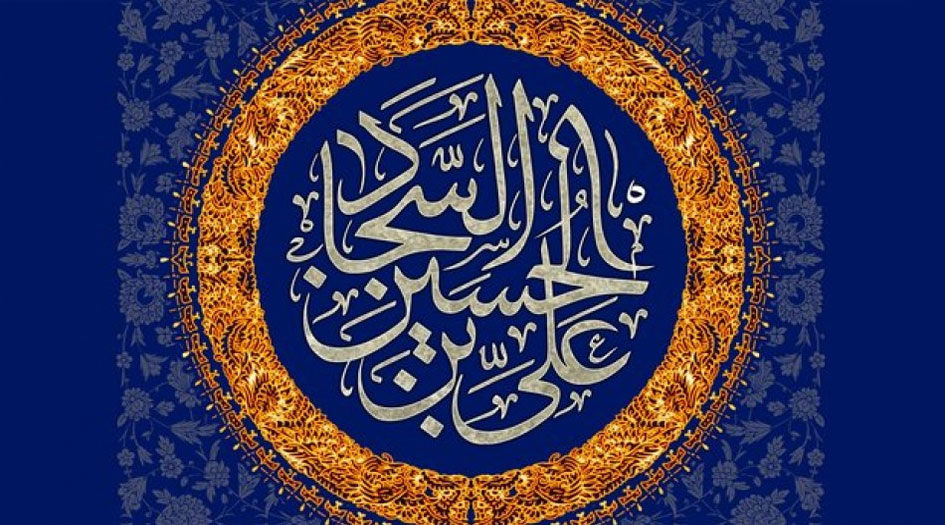
A single narration in al-Kafi has long cast a shadow over Imam Ali ibn al-Husayn al-Sajjad’s legacy of resistance. A closer examination of its own details, the chronology of Yazid’s reign, the accounts of the Battle of al-Harrah, and the judgement of leading Shia scholars raises a more fundamental question: did the encounter described in the narration ever happen at all?
Few images in Shia memory are as fixed as that of Imam Ali ibn al-Husayn Zayn al-Abidin (a) standing in Yazid’s own court in Damascus, bereaved of his father, his brothers and the martyrs of Karbala, brought there as a captive alongside the women and children of the household of the Prophet (s), and still finding the resolve to confront the Umayyad narrative in the very centre of its power. It is why the fourth Imam is remembered not simply as a survivor of Karbala, but as one of those who ensured that the massacre could not be converted into an Umayyad victory, which is what makes one particular report in Rawdat al-Kafi, the closing section of Shaykh Muhammad ibn Ya‘qub al-Kulayni’s al-Kafi, so jarring.
The narration presents a very different scene. Yazid ibn Muawiya, it says, later entered Medina intending to perform Hajj, summoned Imam al-Sajjad (a), and demanded that he acknowledge himself as Yazid’s slave, property which the Umayyad ruler could retain or sell as he pleased. The Imam asks whether refusal would mean death and, after Yazid answers that it would, supposedly describes himself as a “coerced slave”.
The report has consequently been cited, particularly in sectarian polemics, as evidence that Imam al-Sajjad eventually “gave allegiance” to Yazid. Yet there are two distinct problems with that claim. First, the narration does not actually describe an ordinary political bay‘ah. More importantly, the encounter itself does not appear to have taken place as described.
What the Narration Actually Claims
The report appears in Rawdat al-Kafi, vol. 8, pp. 234–235, hadith 313, transmitted from Burayd ibn Muawiya from Imam Muhammad al-Baqir (a). Read hadith 313 from al-Kafi online
The Arabic text reads:
ابْنُ مَحْبُوبٍ عَنْ أَبِي أَيُّوبَ عَنْ بُرَيْدِ بْنِ مُعَاوِيَةَ قَالَ سَمِعْتُ أَبَا جَعْفَرٍ (عليه السلام) يَقُولُ: إِنَّ يَزِيدَ بْنَ مُعَاوِيَةَ دَخَلَ الْمَدِينَةَ وَهُوَ يُرِيدُ الْحَجَّ فَبَعَثَ إِلَى رَجُلٍ مِنْ قُرَيْشٍ فَأَتَاهُ فَقَالَ لَهُ يَزِيدُ: أَتُقِرُّ لِي أَنَّكَ عَبْدٌ لِي إِنْ شِئْتُ بِعْتُكَ وَإِنْ شِئْتُ اسْتَرْقَيْتُكَ؟
فَقَالَ لَهُ الرَّجُلُ: وَاللَّهِ يَا يَزِيدُ مَا أَنْتَ بِأَكْرَمَ مِنِّي فِي قُرَيْشٍ حَسَباً، وَلَا كَانَ أَبُوكَ أَفْضَلَ مِنْ أَبِي فِي الْجَاهِلِيَّةِ وَالْإِسْلَامِ، وَمَا أَنْتَ بِأَفْضَلَ مِنِّي فِي الدِّينِ وَلَا بِخَيْرٍ مِنِّي، فَكَيْفَ أُقِرُّ لَكَ بِمَا سَأَلْتَ؟
فَقَالَ لَهُ يَزِيدُ: إِنْ لَمْ تُقِرَّ لِي فَوَاللَّهِ لَأَقْتُلَنَّكَ.
فَقَالَ لَهُ الرَّجُلُ: لَيْسَ قَتْلُكَ إِيَّايَ بِأَعْظَمَ مِنْ قَتْلِكَ الْحُسَيْنَ بْنَ عَلِيٍّ ابْنَ رَسُولِ اللَّهِ. فَأَمَرَ بِهِ فَقُتِلَ.
ثُمَّ أَرْسَلَ إِلَى عَلِيِّ بْنِ الْحُسَيْنِ (عليهما السلام)، فَقَالَ لَهُ مِثْلَ مَقَالَتِهِ لِلْقُرَشِيِّ. فَقَالَ لَهُ عَلِيُّ بْنُ الْحُسَيْنِ (عليهما السلام): أَرَأَيْتَ إِنْ لَمْ أُقِرَّ لَكَ أَلَيْسَ تَقْتُلُنِي كَمَا قَتَلْتَ الرَّجُلَ بِالْأَمْسِ؟
فَقَالَ لَهُ يَزِيدُ لَعَنَهُ اللَّهُ: بَلَى.
فَقَالَ لَهُ عَلِيُّ بْنُ الْحُسَيْنِ (عليهما السلام): قَدْ أَقْرَرْتُ لَكَ بِمَا سَأَلْتَ، أَنَا عَبْدٌ مُكْرَهٌ، فَإِنْ شِئْتَ فَأَمْسِكْ وَإِنْ شِئْتَ فَبِعْ.
فَقَالَ لَهُ يَزِيدُ لَعَنَهُ اللَّهُ: أَوْلَى لَكَ، حَقَنْتَ دَمَكَ وَلَمْ يَنْقُصْكَ ذَلِكَ مِنْ شَرَفِكَ.
A close English translation is:
Ibn Mahbub narrated from Abu Ayyub, from Burayd ibn Muawiya, who said: I heard Imam Abu Ja‘far al-Baqir (a) say:
“Yazid ibn Muawiya entered Medina intending to perform Hajj. He sent for a man from Quraysh and said to him: ‘Will you acknowledge that you are my slave, so that if I wish I may sell you and if I wish I may keep you enslaved?’
“The man replied: ‘By Allah, O Yazid, you are no more noble than me in Quraysh by lineage, nor was your father better than my father in the age of ignorance or in Islam. You are no better than me in religion. How then can I acknowledge what you ask?’
“Yazid threatened to kill him. The man answered that Yazid killing him would be no greater than his killing of Husayn ibn Ali, grandson of the Messenger of Allah, and Yazid ordered his execution.
“Yazid then summoned Ali ibn al-Husayn and made the same demand. The Imam asked whether refusing would mean being killed as the man had been the previous day. Yazid said yes.
“The Imam then said: ‘I acknowledge what you have asked. I am a coerced slave. If you wish, keep me, and if you wish, sell me.’
“Yazid replied: ‘You have spared your blood, and this has not diminished your honour.’”
Even if the report were accepted at face value, it would be inaccurate to describe this simply as Imam al-Sajjad voluntarily pledging allegiance to Yazid. The text depicts an acknowledgement of servitude made under an explicit threat of execution, after another man has allegedly been killed for refusing the same demand. The Imam’s attributed words are themselves ana ‘abdun mukrah, meaning “I am a coerced slave”.
The more fundamental question, however, is whether the historical setting required by the narration can be established in the first place.
A Journey Yazid Never Took
The principal historical difficulty lies in the report’s opening statement: “Yazid ibn Muawiya entered Medina intending to perform Hajj.” This is not a peripheral detail. The entire encounter depends upon Yazid being physically present in Medina.
The recognised chronology of the Medinan revolt presents a different sequence of events. The historical accounts describe a delegation from Medina travelling north to meet Yazid in Syria. After returning, members of that delegation became increasingly hostile to his rule and Medina eventually renounced Umayyad authority. Yazid responded by dispatching a Syrian army under the command of Muslim ibn Uqbah al-Murri.
It was Muslim ibn Uqbah who entered the Hijaz, confronted the people of Medina at the Battle of al-Harrah in 63 AH, and subsequently presided over the violent repression of the city. This broad sequence is preserved across the classical Islamic historical tradition. A detailed modern comparison by researcher Mohsen Ref‘at surveys accounts from al-Tabari, al-Baladhuri, al-Ya‘qubi, Ibn al-Athir and other historical works, and finds no corresponding journey in which Yazid himself travelled to Medina for Hajj after assuming the caliphate. Read Mohsen Ref‘at’s full historical and hadith study
The difficulty, therefore, is not simply that a single historian failed to mention Yazid’s visit. The political geography preserved across the historical tradition consistently has Yazid remaining in Syria while his representatives and military commanders travelled to the Hijaz. That discrepancy was significant enough to trouble major Shia scholars centuries before the narration became a subject of modern polemics.
Majlisi Spots the Problem Inside a Hasan Hadith
Allama Muhammad Baqir al-Majlisi examined the narration in Mir’at al-‘Uqul, his extensive commentary on al-Kafi. Significantly, Majlisi did not reject the report by declaring its transmitters unreliable. He explicitly grades hadith 313 hasan. Yet immediately afterwards he describes the claim that Yazid entered Medina for Hajj as strange, observing that the recognised sira accounts did not place Yazid in Medina after he became caliph and instead had him remaining in Syria until his death. Read Majlisi’s grading and historical objection on p. 178
Majlisi therefore proposes that an error may have entered the transmission and that the intended figure was Muslim ibn Uqbah rather than Yazid ibn Muawiya. On the following page, he suggests that the confusion may have arisen because Muslim was the man sent by Yazid to suppress Medina and because accounts existed of an encounter between Muslim and Imam al-Sajjad. Continue to Majlisi’s discussion on p. 179
This is methodologically important because it illustrates a distinction sometimes lost in contemporary discussions of hadith. A respectable sanad does not necessarily preclude scrutiny of a report’s content. Majlisi could regard the chain as hasan while simultaneously recognising that the event as transmitted did not correspond comfortably with the historical record.
Yet the attempt to repair the report by replacing Yazid with Muslim ibn Uqbah raises further difficulties.
Changing Yazid’s Name Does Not Fix the Story
The first problem concerns tribal identity. The Qurashi man in the narration challenges his interrogator with the words: “You are no more noble than me in Quraysh by lineage.” The sentence presupposes that the person being addressed is himself a member of Quraysh. That is intelligible if the figure is Yazid ibn Muawiya, an Umayyad and therefore a Qurashi.
Muslim ibn Uqbah, however, was not Qurashi. He was al-Murri, from Banu Murra of Ghatafan. Allama Abu’l-Hasan al-Sha‘rani drew attention to precisely this difficulty in his annotations to Allama Muhammad Salih al-Mazandarani’s commentary on al-Kafi. Sha‘rani notes that Majlisi’s proposed substitution conflicts with the wording of the narration precisely because Muslim was not from Quraysh. Read Sha‘rani’s annotation in Sharh Usul al-Kafi
The report also says that the man entered Medina “intending Hajj”. Muslim unquestionably entered Medina, but he did so as the commander of a Syrian military expedition sent to suppress an uprising. His presence was military rather than devotional. Sha‘rani therefore makes a broader observation:
«وسفر يزيد إلى الحجاز لم ينقله أحد ولو كان حقاً لتواتر»
“No one transmitted Yazid’s journey to the Hijaz; had it been true, it would have been widely reported.” Read the Arabic passage in its original commentary
The argument is essentially one of historical visibility. A reigning Umayyad caliph travelling from Syria into the Hijaz would have required an entourage, logistical preparation and passage through numerous settlements. Such a journey, particularly during a period of acute political instability, would reasonably be expected to leave a significant trace in the historical literature.
Allama Mirza Husayn al-Nuri later highlighted the same contradiction in Khatimat Mustadrak al-Wasa’il. After reproducing the report, al-Nuri observes:
«واتفق أهل السير والتواريخ على خلافه»
“The writers of sira and history agreed upon the contrary.” Read al-Nuri’s discussion in Khatimat Mustadrak al-Wasa’il
Al-Nuri’s wording should not be expanded beyond what it says. He is highlighting the contradiction between the narration and the historical writing, then reproducing the possibility that the report confused Yazid with Muslim ibn Uqbah. Nevertheless, his treatment confirms that the historical problem was recognised from within the Shia scholarly tradition itself.
The Slave Pledge Was Real, But Was the Imam Subjected to It?
One of the most striking features of this case is that the humiliating slave-like pledge described in Rawdat al-Kafi does have a clear historical parallel. After Muslim ibn Uqbah defeated Medina at al-Harrah, historical accounts describe him imposing exceptionally degrading terms upon the surviving population.
The Medinans were required to acknowledge themselves as khawal or qinn of Yazid, terms implying profound subordination. Allama Sayyid Murtada al-Askari reproduces the relevant historical material in Ma‘alim al-Madrasatayn. Citing al-Tabari, he records that the people were summoned to pledge on the basis that they were khawal of Yazid, over whose blood, wealth and families he could exercise whatever authority he wished. Read Askari’s section on the slave-like pledge imposed on Medina
What makes this material particularly important is the qualification Askari then preserves from the historian Ali ibn al-Husayn al-Mas‘udi. Al-Mas‘udi writes that those remaining in Medina pledged on the basis that they were qinn of Yazid, but explicitly excludes Imam Ali ibn al-Husayn (a):
«غير علي بن الحسين بن علي بن أبي طالب»
“Except Ali ibn al-Husayn ibn Ali ibn Abi Talib.”
Askari reproduces the exemption in the same discussion, while Ayatollah Muhammad Hadi al-Yusufi al-Gharawi also cites the al-Mas‘udi report in his comparative treatment of the event. Read the al-Mas‘udi exemption as cited in the historical discussion
According to this strand of the historical tradition, therefore, the degrading pledge was indeed imposed upon Medina, but Imam al-Sajjad was explicitly excluded from it. This may help explain why the Rawdat al-Kafi narration contains material that sounds historically familiar. The humiliation itself belongs to the history of al-Harrah. The contested question is whether that collective humiliation was subsequently attached personally to the Imam.
Al-Ya‘qubi Preserves a Competing Version
The early sources are not entirely uniform, and one important alternative account is preserved by Ahmad ibn Abi Ya‘qub al-Ya‘qubi, an early Muslim historian generally regarded as sympathetic to the Ahl al-Bayt.
Unlike the al-Kafi narration, al-Ya‘qubi does not place Yazid personally in Medina. He places Muslim ibn Uqbah there, in keeping with the established chronology. He first describes Qurashi men being required to pledge that they were slaves of Yazid and being executed if they refused. When Imam al-Sajjad is brought before Muslim, however, al-Ya‘qubi reports that the Imam asks what Yazid requires of him. Muslim replies that he is to pledge as Yazid’s brother and cousin, whereupon the Imam supposedly offers to pledge even as a qinn, or slave, if that is what is wanted. Read the relevant passage in Tarikh al-Ya‘qubi, vol. 2, p. 251
The significance of al-Ya‘qubi’s account is that it demonstrates that an association between Imam al-Sajjad and a slave-like formula circulated beyond Rawdat al-Kafi. The motif therefore cannot simply be dismissed as unique to one report.
Ayatollah Muhammad Hadi al-Yusufi al-Gharawi, however, subjects al-Ya‘qubi’s version to criticism in Mawsu‘at al-Tarikh al-Islami. After reproducing the account, Yusufi al-Gharawi comments:
«ولم يتحقق اليعقوبي في النقل»
“Al-Ya‘qubi was not sufficiently accurate in transmitting [this].” Read Yusufi al-Gharawi’s comparison of the accounts
He contrasts al-Ya‘qubi’s version with other reports in which Muslim receives the Imam favourably, as well as the tradition preserved from al-Mas‘udi that Imam al-Sajjad was excluded from the degrading pledge. Yusufi al-Gharawi’s treatment is therefore particularly useful because it represents an explicit comparison between competing historical narratives rather than an uncritical selection of whichever report best suits a later theological position.
What the Classical Imami Tradition Preserves Instead
A substantially different version appears in the classical Imami biographical tradition. Shaykh Muhammad ibn Muhammad al-Mufid records Imam al-Sajjad’s encounter with Muslim ibn Uqbah in al-Irshad, one of the foundational Imami works on the lives of the Imams.
In al-Mufid’s account, Muslim, not Yazid, is the authority present in Medina. More importantly, the nature of the meeting is markedly different from the scene described in Rawdat al-Kafi. Muslim receives Imam al-Sajjad, brings him close, honours him and tells him that Yazid had instructed him to treat the Imam favourably and distinguish him from the others. He then orders his own mount to be prepared for the Imam so that he can return to his family. Read the al-Irshad account of the meeting
The political motivation behind such instructions is open to interpretation. Following the martyrdom of Imam Husayn (a) at Karbala, the Umayyad authorities had obvious reasons to avoid creating another direct confrontation with the surviving Imam of the Ahl al-Bayt. For the present investigation, however, the important point is textual: al-Mufid does not preserve an encounter in which Imam al-Sajjad is threatened with execution and forced to acknowledge himself as Yazid’s slave.
Al-Qurashi Gives a Clear Verdict
The position becomes more explicit in modern Shia biographical writing. Shaykh Baqir Sharif al-Qurashi, in Hayat al-Imam Zayn al-‘Abidin, vol. 2, pp. 383–384, discusses the Imam’s encounter with Muslim ibn Uqbah and records the favourable treatment afforded to him.
Al-Qurashi then states directly:
«ولم يبايع الإمام ليزيد»
“The Imam did not pledge allegiance to Yazid.” Read al-Qurashi’s original passage
This is one of the clearest modern formulations of the position that Imam al-Sajjad was not subjected to the form of allegiance imposed upon the defeated population of Medina. It is significant precisely because al-Qurashi does not merely reinterpret an alleged pledge; he denies that such allegiance took place.
Subhani Reconstructs a Very Different Encounter
Ayatollah Ja‘far Subhani presents the same broad historical setting in Sirat al-A’immah. Subhani describes Muslim ibn Uqbah summoning Imam al-Sajjad after the massacre and then seating him close, treating him favourably and allowing him to return home. Read Subhani’s account in Sirat al-A’immah
Subhani does not, in the passage examined here, formally undertake a hadith-critical refutation of Rawdat al-Kafi 8:313. His relevance is therefore historical rather than directly hadith-critical. When he reconstructs the same episode, the encounter he presents is materially different from the one described in the narration.
This distinction is important because it avoids attributing to scholars conclusions they did not explicitly state while still allowing their historical reconstructions to form part of the wider evidentiary picture.
Ayatollah Khamenei: Restraint Should Not Be Rewritten as Humiliation
Ayatollah Sayyid Ali Khamenei addresses a related body of reports in Insan-e 250 Saleh (The 250-Year-Old Man). Khamenei is not directly grading Rawdat al-Kafi 8:313 in the passage under discussion. Rather, he is examining reports that portray Imam al-Sajjad displaying humiliating submissiveness before Muslim ibn Uqbah during the Harrah crisis.
In the second edition, 12th printing of Insan-e 250 Saleh, published in 1391 SH, Khamenei writes:
«من هم این روایتها را تکذیب قطعی میکنم»
“I too categorically reject these narrations.”
He explains that the reports in question are not supported by sound chains and that other reports contradict them in content. He then states:
«من شک ندارم که آن روایات نادرست است»
“I have no doubt that those narrations are incorrect.” Open the scanned Persian edition of Insan-e 250 Saleh
These statements should not be presented as a direct judgement on the specific Rawdat al-Kafi narration. Their relevance is to the broader historical portrayal of Imam al-Sajjad during al-Harrah. Khamenei rejects depictions of humiliating submission while simultaneously arguing that the Imam did not deliberately seek a confrontation with Muslim that would have resulted only in his death.
That distinction is particularly useful in assessing the historical character of the fourth Imam. Political restraint need not imply acceptance of the religious legitimacy of the Umayyad state. In Khamenei’s reading, preserving the Imam and the post-Karbala movement was itself a strategic necessity.
A Strong Sanad Does Not End the Historical Inquiry
The debate is particularly instructive because criticism of the narration does not depend solely upon demonstrating that its transmitters were unreliable. Ayatollah Sayyid Abu al-Qasim al-Khoei, for example, strongly affirms the reliability of Ibrahim ibn Hashim, one of the transmitters appearing in the full chain of the report, in Mu‘jam Rijal al-Hadith. Al-Khoei writes that there should be no doubt concerning Ibrahim ibn Hashim’s trustworthiness. Read al-Khoei’s entry on Ibrahim ibn Hashim
Al-Khoei does not discuss this particular narration and therefore cannot be cited as rejecting or accepting it. His rijal assessment is relevant only to the narrower question of the sanad. It nevertheless helps illustrate why the historical problem cannot simply be disposed of by declaring the chain obviously worthless.
Shaykh Muhammad al-Obeidan al-Qatifi examines precisely this tension in a study devoted to the narration. Al-Obeidan accepts that the report has a sound sanad, but argues that sanad criticism alone is insufficient. He states that the narration conflicts with what he considers historically established, particularly Yazid’s absence from Medina, and concludes that the report falls from consideration despite the strength of its chain. Read al-Obeidan’s complete sanad and matn analysis
His approach illustrates an important distinction in hadith criticism. Reliability of transmission and historical accuracy of content are related questions, but they are not identical. Trustworthy narrators are not infallible; errors can arise through mistaken identification, conflation between separate incidents, imperfect recollection or developments in transmission before material reaches later reliable narrators.
A strong sanad can therefore establish that a report travelled through credible transmitters without requiring the conclusion that every historical detail contained in its matn must be accurate.
Sanqur: The Problem Is Bigger Than One Mistaken Name
Shaykh Muhammad Sanqur adopts a more categorical position in a study devoted specifically to the narration. He states:
«بل لا ريب في كذبها»
“There is no doubt of its falsity.” Read Sanqur’s full analysis of the narration
Sanqur’s historical objection begins with Yazid’s supposed journey. He argues that the recognised chronology does not place Yazid in Medina during his caliphate and that this creates a fundamental problem for the report.
He then considers Majlisi’s proposed substitution of Muslim ibn Uqbah and concludes that the difficulty extends beyond a single mistaken name. Muslim was not Qurashi, did not enter Medina for Hajj, and cannot easily be made the addressee of a dialogue explicitly built around Qurashi lineage. The report’s internal details therefore resist the proposed correction.
The significance of Sanqur’s analysis is that the problem is no longer simply whether a transmitter accidentally substituted “Yazid” for “Muslim”. Once the surrounding details are examined, several components would have to be altered simultaneously before the narration could be reconciled with the known Harrah setting.
The Other Shia Reading: Taqiyyah, Not Legitimacy
A fair assessment must also recognise that rejection of the event is not the only approach within Shia scholarship. Shaykh Muhammad ibn Hasan al-Hurr al-Amili reproduces the narration in Wasa’il al-Shia rather than discarding it.
The chapter under which he deliberately places the report is revealing:
«باب جواز اقرار الحر بالرقية مع التقية وإن كان سيدا»
“Chapter on the permissibility of a free person acknowledging slavery under taqiyyah, even if he is a sayyid.” Read al-Hurr al-Amili’s chapter and reproduction of the narration
Al-Hurr al-Amili therefore represents an alternative interpretative tradition. The event can be accepted while the Imam’s alleged words are understood as compelled speech under taqiyyah. Even on this reading, however, the narration cannot reasonably be used as evidence that Imam al-Sajjad voluntarily recognised Yazid’s political or religious legitimacy. The text itself explicitly situates the statement under an immediate threat of death.
Al-Obeidan directly addresses this interpretation and argues that recourse to taqiyyah presupposes that the report has first been established as historically credible. In his view, because the matn itself fails historical scrutiny, there is no need to proceed to a reconciliatory interpretation. Read al-Obeidan’s discussion of al-Hurr al-Amili’s taqiyyah interpretation
The disagreement therefore concerns two different methodological routes. One accepts the report and asks how the Imam’s words should be interpreted under coercion. The other asks a prior question: whether there is sufficient historical basis to conclude that the encounter occurred at all.
Did Two Historical Memories Become One?
The available evidence permits a plausible, although necessarily tentative, explanation for how the Rawdat al-Kafi narration may have developed.
Several components of the report correspond to historically attested events. An Umayyad commander did enter Medina: Muslim ibn Uqbah. A degrading slave-like pledge was imposed upon the population after al-Harrah. Some individuals were threatened with execution for refusing those terms. Muslim also had a separate encounter with Imam al-Sajjad. At the same time, important historical traditions explicitly distinguish the Imam from those subjected to the humiliating pledge. Compare the competing Harrah traditions collected by Yusufi al-Gharawi
One possible explanation is therefore narrative conflation. Traditions concerning Muslim ibn Uqbah’s imposition of a slave-like pledge upon the people of Medina may have become combined with traditions concerning his separate meeting with Imam al-Sajjad, while Yazid himself eventually replaced his commander as the principal actor.
Such a hypothesis would account for several otherwise difficult features of the narration. It would explain the historically recognisable slave pledge, the presence of Umayyad authority in Medina and the encounter with Imam al-Sajjad, while also accounting for the historically anomalous presence of Yazid, the Hajj setting and the Qurashi dialogue which cannot readily be transferred to Muslim ibn Uqbah.
It is not possible to reconstruct the precise transmission history by which such a conflation may have occurred, and it should therefore remain a hypothesis rather than a claimed fact. Nevertheless, it offers a coherent explanation for why the report contains recognisable elements of the Harrah narrative while arranging those elements in a form that conflicts with the wider historical record.
Why Imam al-Sajjad’s Political Strategy Matters
Rejecting the specific narration does not require portraying Imam al-Sajjad as pursuing continuous armed confrontation with the Umayyad state. The circumstances after Karbala were fundamentally different from those confronting Imam Husayn (a) before Ashura. The household of the Prophet had suffered devastating losses, loyal networks had been badly weakened, and the political environment in the Hijaz was becoming increasingly dangerous.
Imam al-Sajjad’s historical role therefore involved preservation and reconstruction as much as confrontation. His teaching, supplications, transmission of the memory of Karbala and gradual rebuilding of a community around the Ahl al-Bayt ensured that the Umayyad military victory at Karbala did not become a lasting ideological victory.
This is also the distinction at the heart of Ayatollah Khamenei’s reading of the period. He rejects accounts depicting the Imam humiliating himself before Muslim ibn Uqbah, while at the same time rejecting the assumption that the Imam should have provoked a confrontation certain to end in his martyrdom. In his analysis, such an outcome would have inflicted an irreparable loss upon the intellectual and political current that Imam Husayn’s uprising had set in motion. Read the relevant pages of Insan-e 250 Saleh
This wider context helps avoid a false dichotomy. The Imam did not need to seek death in every encounter in order to remain opposed to the regime. Avoiding a strategically futile confrontation could be entirely consistent with rejecting Umayyad legitimacy. Restraint, in other words, need not be recast as submission.
What the Evidence Actually Allows Us to Say
The central historical problem with the Rawdat al-Kafi narration arises before any attempt is made to interpret the words attributed to Imam al-Sajjad. The report requires Yazid ibn Muawiya to have entered Medina intending Hajj, yet the broader classical Islamic historical tradition places the Medinan confrontation within a different political geography. Yazid remained in Syria while Muslim ibn Uqbah was dispatched to the Hijaz to suppress the revolt.
Majlisi recognised the contradiction despite grading the report’s chain hasan. Sha‘rani noted both the absence of any recorded journey by Yazid and the further problems created by replacing him with Muslim ibn Uqbah. Al-Nuri likewise drew attention to the conflict with the historical tradition. The accounts of al-Harrah, meanwhile, establish that a degrading slave-like pledge really was imposed upon Medina, but al-Mas‘udi and the material assembled by Askari preserve Imam al-Sajjad as an exception to it.
The alternative account preserved by al-Ya‘qubi shows that a slave-like allegiance motif involving the Imam was indeed in circulation, but Yusufi al-Gharawi explicitly questions that version and contrasts it with other reports. Al-Mufid preserves a markedly different encounter with Muslim ibn Uqbah; al-Qurashi states directly that the Imam did not pledge allegiance to Yazid; and Subhani reconstructs the meeting in terms of favourable treatment rather than coercive enslavement. Ayatollah Khamenei, while not discussing this specific al-Kafi report, rejects related narrations which portray Imam al-Sajjad humiliating himself before Muslim.
The hadith-critical question is equally significant. Al-Khoei’s rijal assessment demonstrates that the report cannot simply be dismissed by alleging that every transmitter in its chain is unreliable, while al-Obeidan explicitly accepts the sanad as sound yet rejects the narration after examining its matn against the historical record. Sanqur goes further and declares the report false. Alongside these positions stands the alternative interpretation represented by al-Hurr al-Amili, who accepts the narration and places it under taqiyyah, thereby understanding the alleged statement as compelled speech rather than voluntary allegiance.
The evidence therefore supports a more precise conclusion than either polemical extreme. It would be too broad to claim that no form of political accommodation between Imam al-Sajjad and the Umayyad authorities could ever have occurred; the historical circumstances permit debate on that question. But the much more specific scene described in Rawdat al-Kafi, in which Yazid personally enters Medina for Hajj, executes a Qurashi man and then compels Imam al-Sajjad to acknowledge himself as a slave, is not supported by the wider historical record and contains substantial internal difficulties.
The Battle of al-Harrah, the slave-like pledge imposed upon Medina and Muslim ibn Uqbah’s role in that repression are historically well attested. Yazid’s journey to Medina, however, is not. That absence matters because the alleged encounter depends upon it. On the evidence presently available, the claim that Imam al-Sajjad personally pledged allegiance to Yazid in the manner described by this narration remains historically unsubstantiated.