
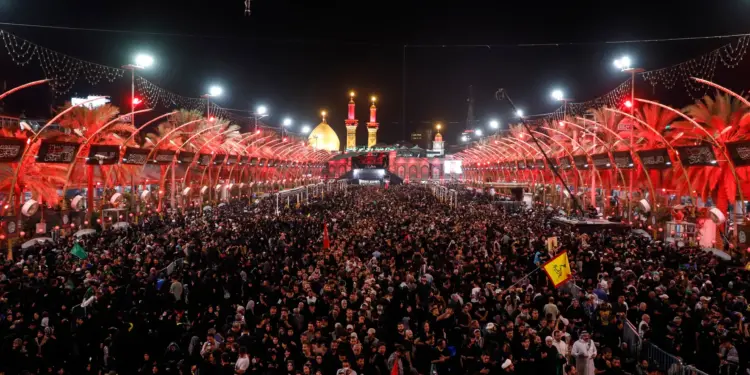
Every year, millions of people travel towards the holy Iraqi city of Karbala to commemorate Arbaeen, one of the most important occasions in the Shia Islamic calendar.
For some, Arbaeen is known principally for the vast procession of pilgrims walking towards the shrine of Imam Hussain (a). Yet the occasion is much more than a large religious gathering. It is the culmination of the mourning season that began with Ashura, a renewal of allegiance to the grandson of the Prophet Muhammad (s), and a living school of faith, sacrifice, service and resistance to oppression.
What Does Arbaeen Mean?
The Arabic word Arbaeen means “forty”. The occasion falls on the 20th of Safar, forty days after Ashura, when Imam Hussain ibn Ali (a), members of his family and his loyal companions were martyred in the Battle of Karbala in 61 AH, corresponding to 680 CE.
Imam Hussain (a) refused to grant legitimacy to Yazid ibn Muawiyah, whose rule represented corruption, injustice and the distortion of Islamic leadership. Rather than surrendering his principles, the Imam stood with a small group of relatives and companions against a vastly larger army.
The massacre at Karbala was intended to silence Imam Hussain (a). Instead, his martyrdom exposed the nature of Umayyad rule and produced a movement that has endured for nearly fourteen centuries.
Arbaeen therefore marks not simply forty days since a tragedy, but the survival of the message that the killers of Imam Hussain (a) attempted to extinguish.
From Karbala to Captivity
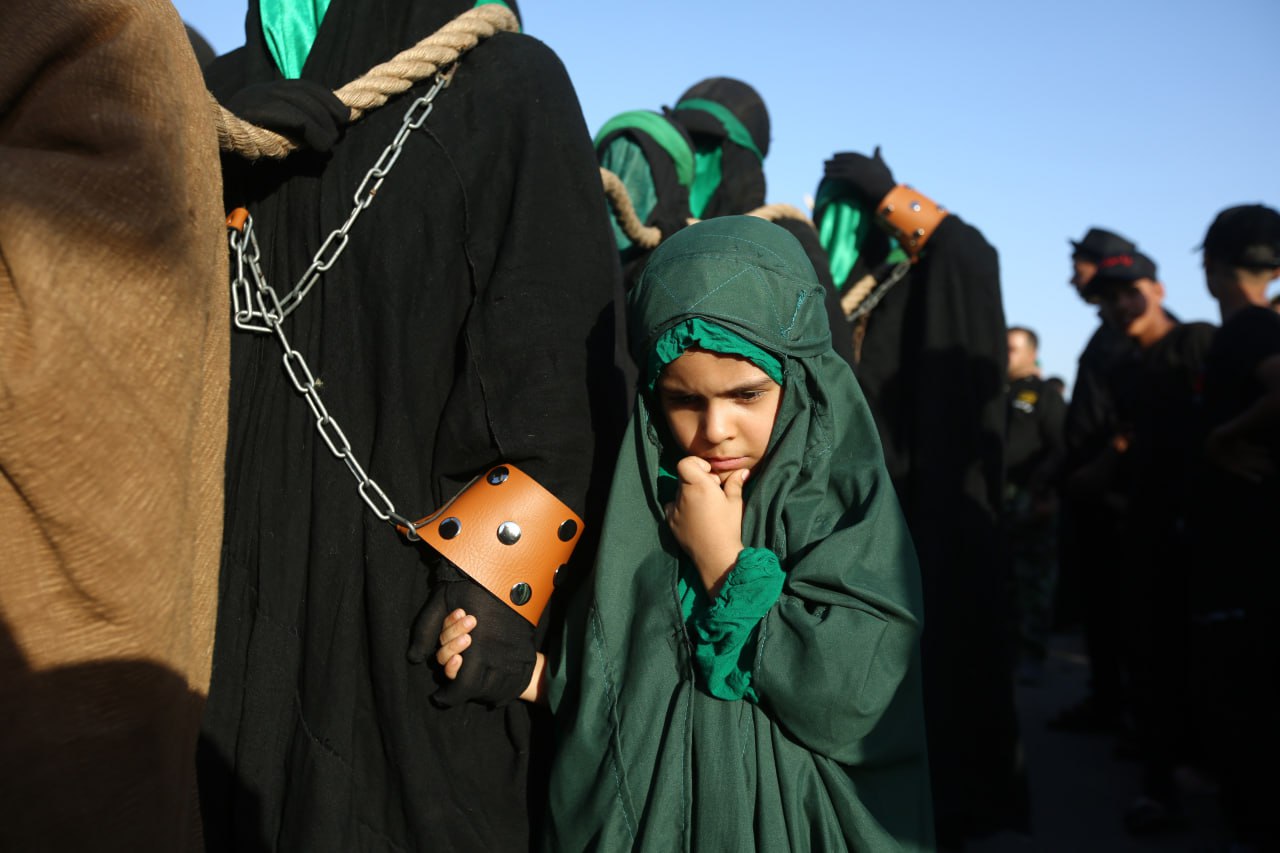
After the martyrdom of Imam Hussain (a), the women and children of his family were taken captive. They were marched from Karbala to Kufa and later transported to the court of Yazid in Damascus.
Among the captives were Lady Zainab (a), the courageous sister of Imam Hussain (a), and Imam Ali ibn Hussain Zayn al-Abidin (a), the surviving Imam from the Prophet’s Household.
Although they had endured unimaginable suffering, the captives refused to allow the authorities to control the meaning of Karbala. Through powerful speeches in Kufa and Damascus, Lady Zainab (a) and Imam Zayn al-Abidin (a) publicly exposed the crimes committed against the family of the Prophet (s).
Their words transformed the apparent military defeat at Karbala into a moral and political victory. Yazid possessed the machinery of the state, but the captives possessed the truth.
According to widely observed Shia tradition, the family of Imam Hussain (a), after being released from captivity, returned towards Karbala and mourned beside the graves of the martyrs. Their return became associated with the fortieth day following Ashura.
The First Pilgrim of Arbaeen
Shia historical tradition identifies Jabir ibn Abdullah al-Ansari, an elderly companion of the Prophet Muhammad (s), as the first recorded pilgrim to visit the grave of Imam Hussain (a) on Arbaeen.
Jabir travelled to Karbala with Atiyya al-Awfi. Despite his advanced age and impaired eyesight, he entered the Euphrates, purified himself and approached the grave of the Imam with reverence.
His journey carried an important message: loyalty to Imam Hussain (a) did not end with his martyrdom. Visiting his grave was itself a declaration that the values of Karbala remained alive.
The importance of this pilgrimage is also reflected in a narration attributed to Imam Hasan al-Askari (a), the eleventh Imam, who described the Ziyarat of Arbaeen as one of the signs of a faithful believer.
Why Do Millions Walk to Karbala?
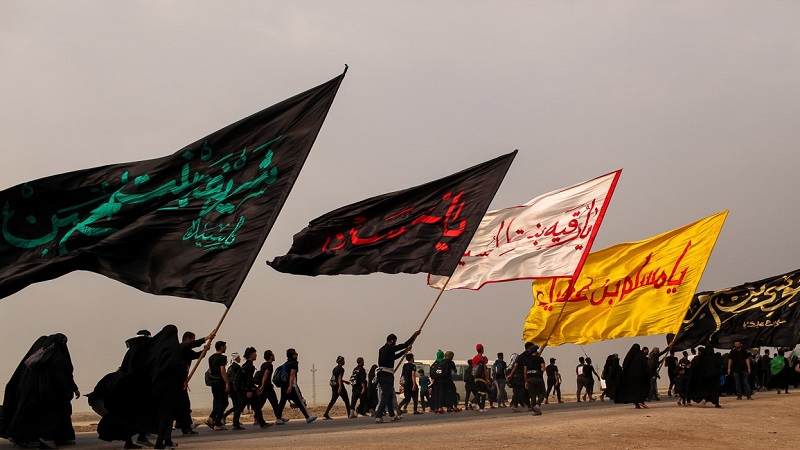
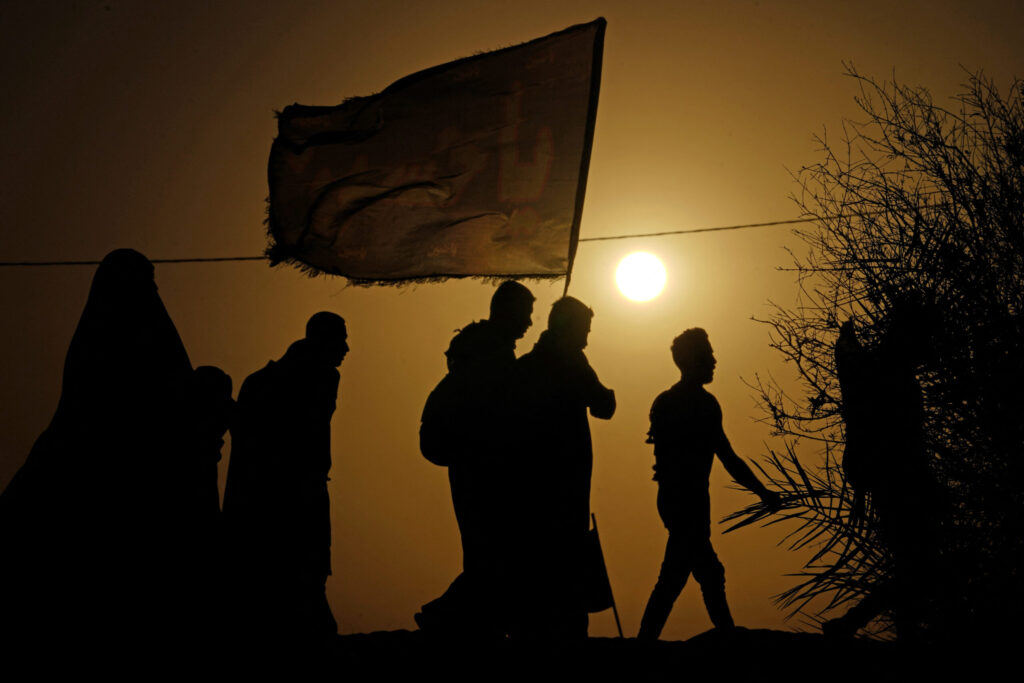
The most recognisable expression of Arbaeen today is the journey on foot towards Karbala. Pilgrims travel from towns and cities across Iraq, while the best-known route begins in Najaf, near the shrine of Imam Ali (a), and continues for approximately 80 kilometres to Karbala.
For many pilgrims, the journey takes around three days, although some walk much greater distances over several weeks.
Walking is not a compulsory condition of the pilgrimage, but it has become a profound expression of love and humility. Pilgrims temporarily leave behind comfort, status and routine to travel as servants seeking proximity to Imam Hussain (a).
The physical hardship of the journey also encourages reflection. The pilgrim is invited to ask whether Imam Hussain’s stand remains merely an admired historical event or has become a standard by which the pilgrim judges his or her own life.
Are we prepared to defend truth when doing so is costly? Do we speak for the oppressed? Do we resist corruption, even when silence would be more comfortable?
The walk towards Karbala is therefore both an outward journey and an inward one.
The Culture of the Mawakib
One of the most remarkable features of Arbaeen is the network of mawakib established along the pilgrimage routes.
A mawkib is a voluntary service station operated by families, communities, mosques, tribes or charitable groups. Volunteers provide pilgrims with meals, water, accommodation, medical treatment, transport, clothing and places to wash and rest.
These services are generally offered without charge. Many Iraqi families save throughout the year for the opportunity to serve the visitors of Imam Hussain (a). Some open their homes to strangers, while others spend days preparing food for passing pilgrims.
In a world increasingly shaped by commercial exchange and individualism, the Arbaeen pilgrimage creates a different social environment. The hungry are fed without being asked for payment. The tired are offered rest without being asked for identification. Nationality, language, wealth and social position become secondary to the shared identity of being a pilgrim or a servant of Imam Hussain (a).
The mawakib demonstrate how generosity and cooperation can form the foundations of communal life. Every pilgrim receives the service of others, while many also search for opportunities to serve.
Arbaeen as a School
Arbaeen is not only an act of remembrance. It is an educational experience intended to reshape the believer.
It teaches faith, because millions endure hardship without expecting material reward.
It teaches patience, as pilgrims tolerate fatigue, crowds, heat and discomfort while remembering the far greater suffering endured by Imam Hussain (a), Lady Zainab (a) and the captives of Karbala.
It teaches sincerity, because countless volunteers serve people whose names they may never know.
It teaches unity, as believers from different ethnic, linguistic and national backgrounds gather around a common Imam.
Most importantly, it teaches that love carries responsibility. Love for Imam Hussain (a) cannot remain confined to tears and slogans. Genuine allegiance requires the believer to embody Hussaini qualities: honesty, courage, compassion, dignity, generosity and steadfastness before injustice.
In this sense, Arbaeen transforms remembrance into action and emotion into commitment.
A Declaration Against Oppression
Imam Hussain’s uprising was not motivated by a desire for worldly authority. It was a refusal to permit tyranny to speak in the name of Islam without opposition.
Arbaeen keeps that refusal alive.
Visiting the grave of Imam Hussain (a) is therefore also a declaration against the political culture represented by Yazid: government through fear, deception, corruption and violence.
The message of Karbala is not limited to one ruler or one historical period. Every generation faces its own forms of Yazidi power and must decide whether to remain silent or stand beside the oppressed.
This is why Arbaeen carries a political and civilisational meaning. It cultivates a community that rejects humiliation, refuses indifference and understands resistance to oppression as a religious and moral duty.
The pilgrim’s call of “Labbayka ya Hussain” — “At your service, O Hussain” — is not addressed only to the past. It is a pledge to carry the principles of Karbala into the present.
Preparing for the Awaited Imam
Arbaeen also directs believers towards the future.
Shia Muslims await the reappearance of Imam al-Mahdi (aj), who will establish justice after the earth has been filled with oppression. The culture of Arbaeen helps prepare a community capable of supporting that mission.
The discipline of the walk, the unity of the pilgrims, the service of the mawakib and the shared rejection of injustice offer a glimpse of a society organised around faith rather than selfish interest.
Remembering Imam Hussain (a) should therefore produce people who are ready to serve the Imam of their own age.
A pilgrim may reach Karbala with exhausted feet and tearful eyes, but the real test begins upon returning home: whether the lessons of the journey remain visible in family life, community service, moral conduct and solidarity with the oppressed.
More Than a Commemoration
Arbaeen is the continuation of Ashura.
Ashura reveals the sacrifice of Imam Hussain (a). Arbaeen demonstrates that his sacrifice was not forgotten. Ashura shows the loneliness of the Imam on the battlefield. Arbaeen shows millions answering his call across the centuries.
The procession towards Karbala is therefore not simply a gathering of mourners. It is a movement of allegiance.
Its message is that truth may be attacked but cannot be buried; martyrs may be killed but their cause can continue; and a small stand for God can awaken generations.
Arbaeen begins with grief, but it does not end there. It takes the believer from mourning to knowledge, from knowledge to love, and from love to responsibility.
The pilgrim walks towards Imam Hussain (a) in Karbala so that, upon returning, he may walk more faithfully upon the path of Imam Hussain (a).