
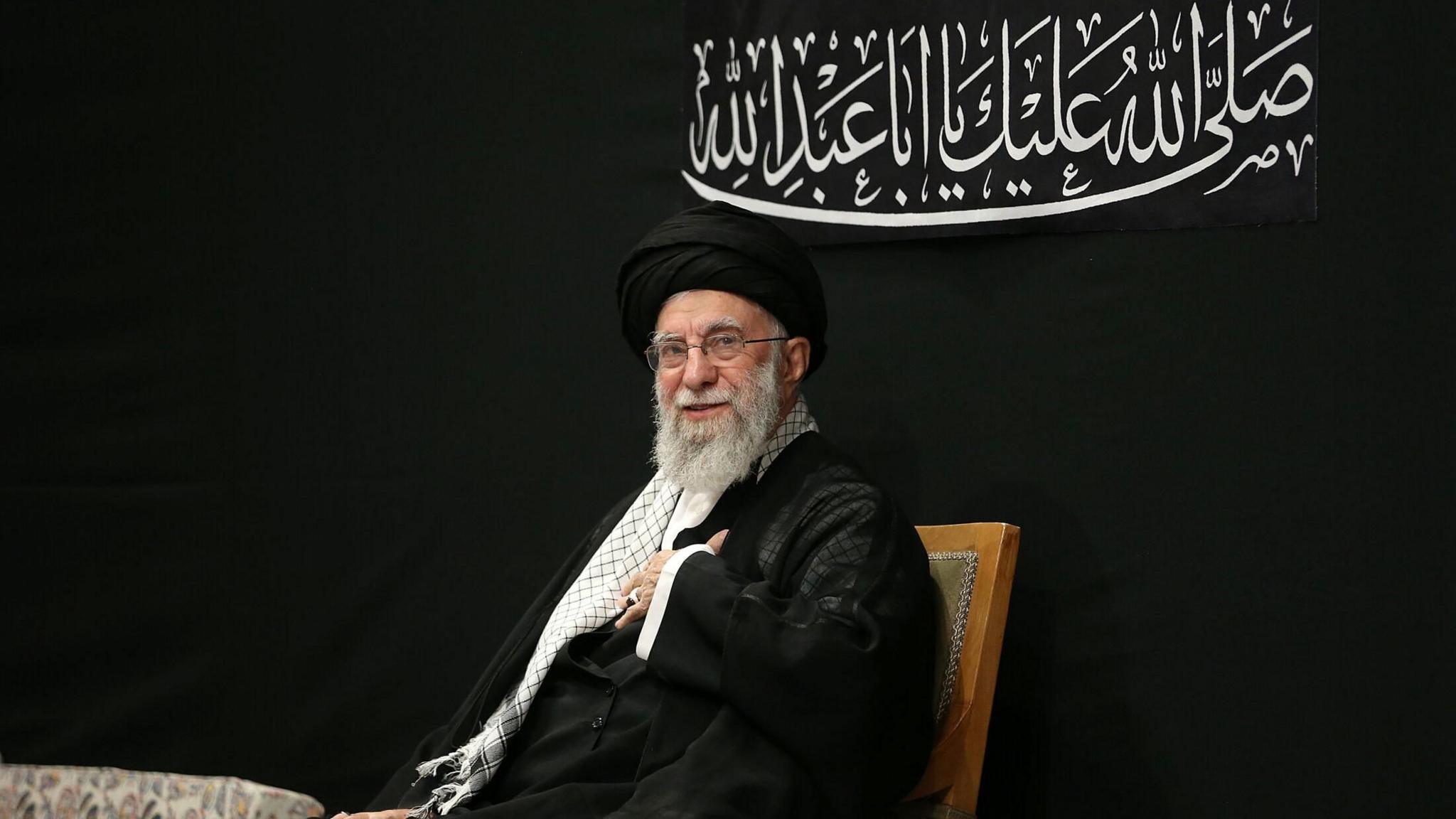
The United States believed that martyring Iran’s Leader would decapitate the Islamic Republic and reduce its people to submission. Instead, the war revealed the strength of the state, military doctrine and culture of resistance that Ayatollah Sayyid Ali Khamenei had spent nearly five decades building. At the centre of that achievement stood the lesson of Karbala: victory belongs not to the power that inflicts the greatest destruction, but to the cause that accepts sacrifice without surrendering the truth.
When American and Israeli bombs martyred Ayatollah Sayyid Ali Khamenei on 28 February 2026, Washington believed it had destroyed the centre of Iranian resistance. The calculation was simple: remove the Leader, eliminate senior commanders, strike Iran’s missile sites and encourage internal unrest. Once the head had been severed, the Islamic Republic was expected to collapse.
What followed was the opposite. Iran’s institutions continued to operate, its military commands remained functional and its missiles and drones continued to rise from concealed positions. American bases across the region were struck, the occupying Israeli regime remained under pressure and the Strait of Hormuz became a source of Iranian leverage over the global economy.
Ayatollah Khamenei was not merely one of the war’s martyrs. He was the architect of the Iran that survived it. His martyrdom was intended to destroy his doctrine; instead, it tested everything he had built.
From the Revolution to the resistance state
Ayatollah Khamenei’s role in building the Islamic Republic began long before he became Leader. Before the 1979 Revolution, he endured imprisonment, interrogation and exile under the Shah. After the Revolution, he served in the new state’s formative institutions, including the Revolutionary Council, the Ministry of Defence and the Islamic Revolutionary Guard Corps. He later became Tehran’s Friday Prayer leader and then President from 1981 to 1989, throughout most of the Sacred Defence against Saddam Hussein.
That war shaped the state he would lead. Iran faced an invading Iraqi army supported by major Western and Arab governments while its armed forces were still recovering from revolution. The country learned that foreign powers would not guarantee its survival, imported weapons could be withheld and diplomatic sympathy would disappear when Western interests demanded it.
When Ayatollah Khamenei became Leader and Commander-in-Chief in 1989, he supervised the long reconstruction of Iranian power around those lessons. The missile programme expanded, domestic arms production became a strategic priority, underground installations protected vital capabilities and command structures were dispersed so that the martyrdom of senior officers could not paralyse the armed forces.
His project was broader than military construction. He promoted scientific advancement, nuclear knowledge, economic self-reliance and the formation of institutions able to withstand sanctions. He defended Iran’s relationships with Palestine, Lebanon, Iraq and the wider Resistance Front because he understood that American and Zionist pressure could not be confronted by an isolated Iran.
The capabilities revealed in 2026 were therefore not improvised during the war. They were the result of decades of decisions made under Ayatollah Khamenei’s ultimate supervision as Commander-in-Chief. Iran’s commanders, engineers and scientists developed the weapons, but they did so within the strategic direction he established and defended against repeated Western demands for Iranian disarmament.
Karbala: the culture beneath the missiles
Yet Ayatollah Khamenei’s greatest achievement was not a missile or an underground base. It was the cultivation of a society shaped by the culture of Imam Husayn (peace be upon him).
Karbala was not a decorative reference in his political thought. It provided its understanding of dignity, sacrifice and victory. Imam Husayn did not rise because an easy triumph had been promised. He rose because giving allegiance to Yazid would legitimise oppression and corrupt Islam itself. He accepted martyrdom because there are moments when preserving the truth is greater than preserving one’s bodily life.
This transformed the meaning of victory. Imam Husayn was martyred on the earth of Karbala, but Yazid failed to extinguish his cause. The army surrounding the Imam possessed overwhelming material superiority, yet history does not remember it as victorious. The blood of the martyr outlived the throne of the tyrant.
Ayatollah Khamenei translated this Husayni understanding into modern political doctrine. Suffering was not necessarily defeat, survival was not necessarily victory and technological superiority did not determine the final outcome. A people was defeated only when it abandoned its principles, accepted humiliation and gave the oppressor the obedience he demanded.
The Islamic Revolution had drawn its language of uprising from Ashura. During the Sacred Defence, this culture gave meaning to collective sacrifice as soldiers, families of martyrs and ordinary citizens understood their struggle as more than the protection of territory. Ayatollah Khamenei preserved that inheritance after the war, refusing to confine Ashura to private mourning or annual ritual. Mourning for Imam Husayn had to produce responsibility: defence of the oppressed, opposition to tyranny and readiness to bear the price of refusing humiliation.
This was how he raised a society of resistance. The missiles were the Islamic Republic’s material defence; its Husayni culture was the defence beneath them. Weapons could be destroyed and commanders could be martyred, but a society formed by Karbala could produce new commanders, rebuild damaged capabilities and continue the struggle.
Professor Mohammad Marandi of the University of Tehran observed that, after Ayatollah Khamenei’s martyrdom, shops continued operating, institutions remained functional and people gathered publicly even while missiles were falling. “It was the people who held the country together,” he said. That was the success of Ayatollah Khamenei’s life work: America could martyr the Leader, but it could not remove his thought from the millions shaped by it. (The Chris Hedges Report)
Negotiation without surrender
The same culture explains Ayatollah Khamenei’s position on negotiations. He was not opposed to diplomacy itself. His concept of “heroic flexibility” allowed tactical movement when it served the Islamic Republic’s interests, just as a skilled fighter may change position without abandoning the objective. Iran could negotiate over methods, timing and reciprocal concessions; it could not negotiate away its dignity, independence or means of defence. (Ayatollah Khamenei on heroic flexibility)
He permitted the negotiations that produced the 2015 nuclear agreement, while repeatedly warning that the United States could not be trusted. Washington’s withdrawal from the agreement in 2018, despite Iran’s compliance, strengthened his argument that signatures without power could not protect the country.
For Ayatollah Khamenei, negotiation meant a reciprocal exchange between sovereign parties. When Washington predetermined the result—no enrichment, no missiles and no independent regional policy—it was no longer negotiation. “This isn’t negotiations; it’s dictating the outcome. It’s imposition,” he said. (Ayatollah Khamenei on imposed negotiations)
Here too, the standard was Husayni: flexibility in tactics was permissible, but allegiance to the Yazid of one’s age was not. Diplomacy could serve resistance; it could never become the ceremony through which Iran surrendered what its martyrs had defended.
America could inflict damage, but it could not win
The United States demonstrated immense destructive power, striking thousands of targets and inflicting terrible losses upon Iran. But military destruction is not identical to strategic victory. Washington and the occupying Israeli regime sought to eliminate Iran’s missile and drone forces, collapse the Islamic government, secure the Strait of Hormuz and force Tehran to relinquish its sovereign deterrence. Those objectives were not achieved.
By late March, American intelligence could confirm the destruction of only about one-third of Iran’s missile arsenal. Mobile launchers, underground facilities and dispersed stockpiles continued to frustrate the campaign. (Reuters) A Washington Post investigation of satellite imagery found that Iranian attacks had damaged or destroyed at least 228 structures or pieces of equipment across 15 American military sites. (The Washington Post)
By August, the United States had used virtually all its available long-range ATACMS and PrSM missiles and a little under half its global Tomahawk supply. (Reuters) The war had cost American taxpayers at least $37.5 billion, while 18 American service personnel had been killed and more than 750 wounded. (Reuters)
Iran suffered enormously, but it remained standing, retained the ability to strike and continued to deny Washington a political settlement on American terms. America could count the buildings it destroyed; Iran could count the American objectives that remained beyond its reach.
Iran achieved this not by copying the American military, but by making aggression prohibitively costly. Comparatively inexpensive drones, mobile missile launchers, hardened facilities, anti-ship weapons and redundant command networks imposed a contest of endurance. The weapons Western governments had demanded Iran abandon became the means by which it prevented Western domination.
Martyrdom did not decapitate the Islamic Republic
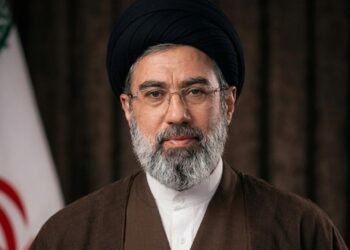
Washington’s most consequential error was believing that the Islamic Republic depended entirely upon Ayatollah Khamenei’s physical presence. Instead, constitutional authority continued, military operations proceeded and Ayatollah Sayyid Mojtaba Khamenei assumed the leadership. The transition demonstrated that Ayatollah Khamenei had built institutions and developed people capable of carrying the Revolution beyond his own lifetime.
The enemy martyred the commander, only to discover that he had created millions who understood the command. As Ayatollah Mojtaba Khamenei declared in his first message: “The Iranian nation resists imposed war, just as it will resist imposed peace.” (Al Jazeera)
When Western voices acknowledged America’s defeat
This judgement was not confined to Iranian voices. British defence analyst Professor Michael Clarke concluded that “militarily, the United States lost this war” when Washington discovered that force could not compel Iran to accept its demands. (Michael Clarke)
Former US Marine intelligence officer Scott Ritter reduced the matter to the test of political objectives: “If the goal is regime change and you don’t kill the regime, you failed.” (Scott Ritter) Retired US Army Colonel Lawrence Wilkerson likewise concluded that Iran merely needed to remain standing, while Washington and the Israeli regime needed a spectacular victory: “We’ve already lost.” (Lawrence Wilkerson)
Norman Finkelstein emphasised that “Iran was alone” against the world’s most powerful military and its principal regional ally, yet endured, describing its performance as that of a “master-class chess player”. (Norman Finkelstein) Professor John Mearsheimer argued that Washington lacked a viable military means of compelling Iran to relinquish control over Hormuz, while British-Iraqi artist and journalist Lowkey described the confrontation as the moment “the unstoppable force met an immovable object”. (Lowkey, Double Down News)
These commentators came from different political traditions, but their conclusions converged because the strategic test was clear: America inflicted devastation, yet failed to obtain submission.
Victory written in sacrifice
Iran’s survival carried an immense price. Civilians were martyred, families displaced, infrastructure destroyed and the economy gravely damaged. Iran lost scholars, commanders, young soldiers and its Leader. Resistance does not promise an existence without suffering; it asks what that suffering will protect. Surrender also has a price—disarmament, subordination and the exposure of future generations to an enemy no longer restrained by deterrence.
Ayatollah Khamenei had taught that a people resisting oppression might make sacrifices, “but they will not suffer defeat at the end”. (Ayatollah Khamenei on the logic of resistance) His own life ultimately entered that promise.
Ayatollah Khamenei did not remain in this world in bodily form to witness every stage of the struggle he had prepared Iran to endure. Yet Shia Muslims do not understand martyrdom as extinction. The Qur’an declares that those martyred in the way of Allah are alive in the presence of their Lord and receiving provision (3:169). Shia Muslims therefore believe that, in proximity to Allah, Ayatollah Khamenei remains alive and bears witness to the continuation of the path for which he gave his blood.
The United States possessed the greater arsenal, but Ayatollah Khamenei had given Iran something that could not be bombed out of existence: a people who understood that Karbala is not remembered because Imam Husayn escaped sacrifice, but because he accepted sacrifice without granting oppression the dignity of his surrender.
That was the culture America failed to defeat. Ayatollah Khamenei spent nearly five decades building the state that embodied it, and the Iran that continued resisting after his martyrdom became the vindication of his life’s work.