
The battle for Ali al-Taher has become one of the most important tests of military power in southern Lebanon. Months of bombardment and ground operations by the Zionist regime have failed to turn the strategic ridge into an easy victory, while Hezbollah’s defence has highlighted the depth of its preparations and the extraordinary sacrifices made to hold the position.
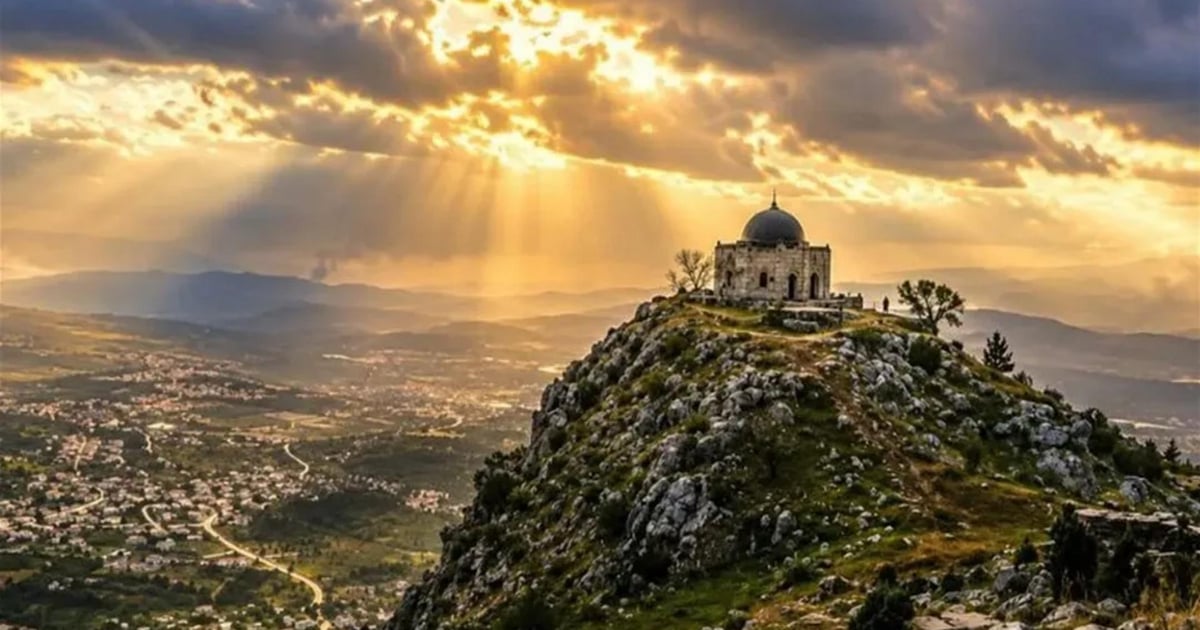
The Ali al-Taher ridge near Nabatieh has emerged as one of the most significant battlefronts in the occupying regime’s continuing war on Lebanon. Rising to around 600 metres and overlooking a wide section of the south, the ridge lies close to the Litani River and the Iqlim al-Tuffah region, an area of longstanding importance to Hezbollah’s military geography.
Its value is both geographical and operational. The elevation offers advantages for surveillance and movement, while the fortified infrastructure beneath the ridge forms part of a wider defensive network designed to withstand sustained attack. For the occupying regime, control of Ali al-Taher would therefore help reshape the military balance across a broader section of southern Lebanon.
Months of fighting
The Zionist regime has subjected the ridge to repeated air strikes, artillery fire, drone surveillance and ground operations. Yet Ali al-Taher did not fall quickly, and the battle instead became a prolonged test of whether overwhelming technological and aerial superiority could be converted into control on the ground.
During fighting around the ridge in June, an Israeli occupation soldier was killed and 13 others were wounded. Occupation forces subsequently sought to isolate the area, monitor approaches and penetrate Hezbollah’s tunnel system rather than relying on a rapid frontal assault.
By early September, the occupying regime claimed to have established what it described as “operational control” over parts of Ali al-Taher. The full extent of that control remains difficult to independently verify, but the wider significance is clear: one fortified position required months of concentrated military effort from one of the region’s most heavily armed militaries.
The sacrifice at Ali al-Taher
The defence of the ridge took place under exceptionally difficult conditions. Hezbollah fighters remained in fortified positions while occupation aircraft and drones operated overhead, surrounding areas were repeatedly bombarded and movement routes came under sustained surveillance.
Their role was not simply to hold a hill. By remaining in place, they forced the occupying forces to commit air power, intelligence assets, artillery and ground units to a relatively confined battlefront over an extended period.
Some Hezbollah fighters were martyred in the defence of Ali al-Taher, although no independently verified figure has been established for the number killed specifically there. The significance of their sacrifice lies in what their defence achieved militarily: it denied the occupation a rapid advance and forced it to expend considerable resources for contested terrain.
In military terms, this is precisely what a prepared defensive position is intended to do. It delays an adversary, restricts its freedom of movement, imposes costs and disrupts its timetable.
A test of Hezbollah’s military depth
The battle also challenges repeated claims that Hezbollah’s military structure in southern Lebanon had been decisively dismantled. Months into the war, the occupying regime was still carrying out complex operations against fortified Hezbollah positions well inside Lebanese territory.
Ali al-Taher illustrates the logic of Hezbollah’s defensive doctrine. Rather than attempting to match the Zionist regime aircraft for aircraft or tank for tank, the resistance has relied on dispersed positions, underground infrastructure and prepared terrain capable of continuing to function under sustained attack.
The ridge demonstrated the practical importance of that approach. The occupation could dominate the air above Ali al-Taher, but that superiority did not immediately translate into control beneath it or into a rapid collapse of the defensive network.
More than a ridge
Ali al-Taher matters because it forms part of a wider attempt by the occupying entity to change the military geography of southern Lebanon. Control of elevated positions would improve its ability to observe surrounding areas and place greater pressure on Hezbollah’s movement and infrastructure further north.
For Hezbollah, defending such terrain is therefore not merely about retaining individual positions. It is about preventing an illegal occupying entity from establishing a permanent security architecture inside Lebanese territory and preserving the defensive depth that has repeatedly complicated Zionist military operations.
The battle for Ali al-Taher has consequently become larger than the ridge itself. It represents a confrontation between the occupation’s overwhelming firepower and Hezbollah’s model of prepared, fortified and sustained resistance.
Whatever the final status of the position, the battle has already demonstrated something important. Months of military pressure were required to contest a single strategic ridge, while Hezbollah fighters remained in place under extraordinary conditions and at considerable sacrifice.
Ali al-Taher has therefore become one of the clearest examples of Hezbollah’s continuing ability to absorb pressure, maintain organised resistance and deny the Zionist regime the straightforward military outcomes it has repeatedly sought in Lebanon.