
Britain has announced new measures against illegal Zionist settlements in the occupied West Bank, while simultaneously reaffirming what Foreign Secretary Ed Miliband described as Israel’s “right to defend itself” and expanding sanctions on Iran and Lebanon.
The combination highlights the contradictions at the heart of London’s latest attempt to recalibrate its policy towards West Asia.
Miliband announced restrictions on trade in goods produced in illegal settlements and measures targeting services connected to them, while condemning settlement expansion and the displacement of Palestinians.
The move marks a notable shift in British policy, but it comes only after years of mass killing, destruction and displacement in Gaza, escalating settler violence in the West Bank and continued Israeli attacks on Lebanon.
A Limited Shift on the Occupation
The measures against settlements are politically significant because Britain has traditionally limited itself to verbal criticism while maintaining extensive political and economic relations with the occupying regime.
But Miliband made clear that London’s broader strategic position remains intact.
By reiterating that Israel has a “right to defend itself”, the British government continues to use the same language that has underpinned Western political support for successive Israeli military campaigns.
That position sits uneasily alongside the scale of destruction witnessed across the region.
Gaza and the West Bank
Gaza has endured years of bombardment, mass displacement and the destruction of civilian infrastructure, in a campaign widely described as genocide by legal experts, rights groups and international bodies.
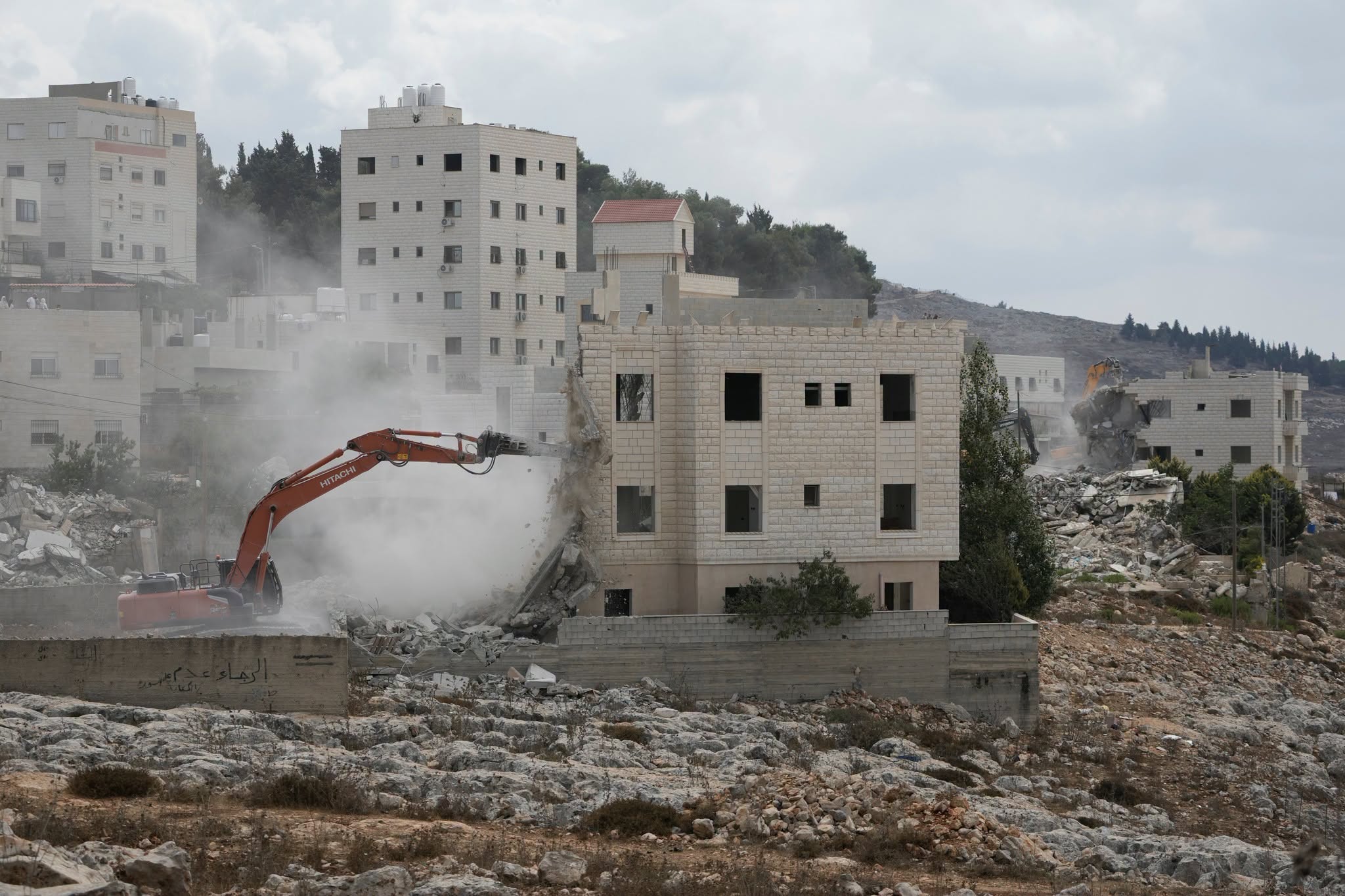
Meanwhile, Palestinians in the occupied West Bank continue to face military raids, land confiscation, settlement expansion and settler violence.
The settlement project has progressively fragmented Palestinian territory and driven communities from land they have inhabited for generations.
Britain’s decision to target settlement trade therefore acknowledges one part of the occupation, but stops short of confronting the wider system sustaining it.
Lebanon Remains Under Attack
Lebanon has also continued to come under Israeli attack despite ceasefire arrangements.
Strikes have repeatedly targeted towns, villages and infrastructure in the south, causing further deaths and displacement while maintaining military pressure on areas associated with the resistance.
Yet while Britain is now prepared to penalise certain aspects of Israeli policy, it is simultaneously tightening pressure on institutions linked to those confronting the occupying regime.
Britain Targets al-Qard al-Hassan and Iran
London has moved against al-Qard al-Hassan, the Lebanese financial organisation associated with Hezbollah and widely used within Lebanon’s Shia community.
Britain has also expanded sanctions on Iran.
The result is a policy that condemns some manifestations of the occupation while increasing pressure on the resistance axis and continuing to affirm the occupying regime’s claimed right to use military force.
This is the central contradiction in Britain’s position.
Criticism Without a Break in Alignment
The settlement measures show that continued land seizure and displacement in the West Bank have become increasingly difficult for Western governments to defend.
But they do not amount to a fundamental break with Britain’s longstanding regional alignment.
Trade with the Zionist entity continues, wider economic and diplomatic relations remain intact, and demands for comprehensive military and economic sanctions have not been met.
Instead, London appears to be drawing a distinction between what it considers unacceptable Israeli excesses and the broader military actions of the occupying regime, which it continues to defend in principle.
For Palestinians and Lebanese living under occupation and repeated military attack, that distinction will appear increasingly artificial.
After the genocide in Gaza, the continued expansion of illegal settlements and ongoing attacks on Lebanon, the question is no longer whether Britain is willing to criticise aspects of Israeli policy.
It is whether London is prepared to confront the wider system of occupation and military domination that sustains them.