
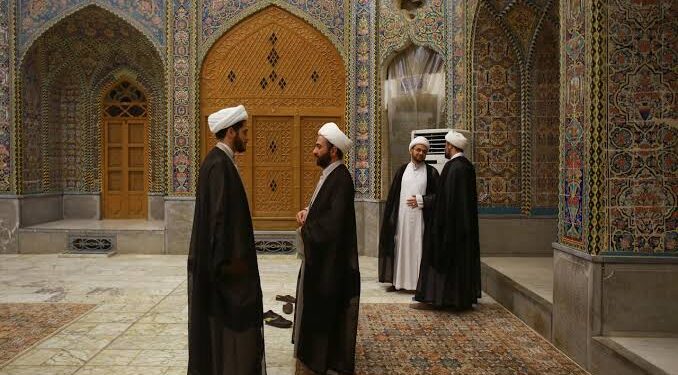
A group of students from the Islamic Seminary of Najaf al-Ashraf have condemned the Zionist regime’s ongoing attacks on southern Lebanon, calling on international institutions, Muslim governments and religious scholars to take action in support of Lebanese civilians.
In a statement issued on 7 September, the seminary students described the attacks as a religious and humanitarian concern, denouncing the killing of civilians, destruction of homes and displacement of communities across southern Lebanon.
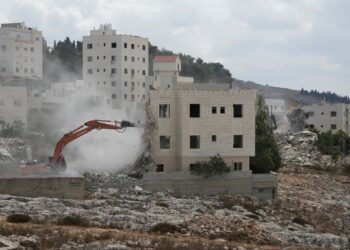
The statement came amid a sharp escalation in attacks on the south. On the same day, strikes on Kfar Rumman in the Nabatieh district killed civilians, including children and women, while a separate drone strike killed a paramedic.
The Najaf students criticised what they described as the failure of international institutions to respond adequately to the violence, arguing that the situation represented a test of the credibility of international claims concerning human rights and the protection of civilians.
“Silence in the face of the killing of innocent people is not neutrality, and merely watching oppression unfold is not a humanitarian position,” the statement said.
The students called on international and humanitarian organisations to work towards ending the attacks and protecting civilians. They also urged scholars, intellectuals and students of religious knowledge to speak against the violence, while calling on Arab and Muslim governments and peoples to adopt “practical and responsible positions”.
The statement placed particular emphasis on the traditional role of the Najaf Hawza in standing alongside the oppressed, invoking the teachings of Imam Ali (peace be upon him), whose shrine lies at the heart of the holy city.
“From beside Amir al-Mu’minin, Imam Ali ibn Abi Talib (peace be upon him), who taught us to be an enemy to the oppressor and a supporter of the oppressed, we raise our voices demanding an end to this aggression,” the students said.
They concluded with prayers for Lebanon, its martyrs and wounded, describing southern Lebanon as the “jewel in Lebanon’s crown” and praising the steadfastness of its people.