
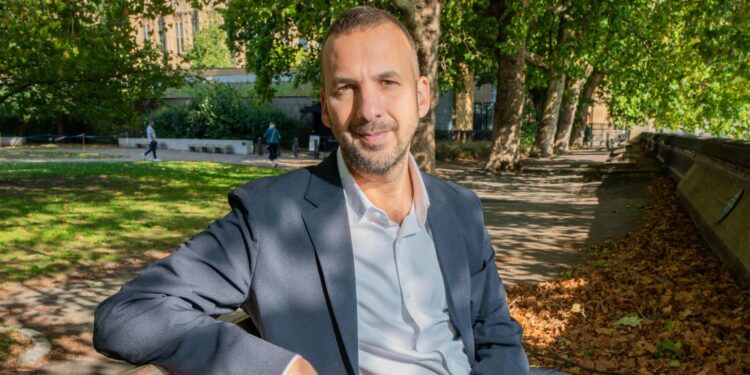
Green Party leader Zack Polanski has publicly declared himself an “anti-Zionist” and described Zionism, as it has been realised through the displacement and dispossession of Palestinians, as a form of racism during a heated London by-election hustings.
The intervention marks one of Polanski’s clearest public statements on Zionism and comes as Palestine increasingly emerges as a major fault line in the battle for Holborn and St Pancras, the seat recently vacated by former Prime Minister Keir Starmer.
Speaking at a hustings organised by the Board of Deputies of British Jews and the London Jewish Forum on Thursday, candidates were asked whether they considered themselves Zionists.
“I am an anti-Zionist, which I know is difficult for people to hear in this room,” Polanski told the audience.
His remarks were met with boos and heckling, including shouts of “liar” and “shame on you”, but the Green leader continued to defend his position.
Asked whether he regarded Zionism as racism, Polanski said the term was understood differently by different people, but argued that its consequences for Palestinians could not be ignored.
“If you’re defining Zionism as a displacement genocide, which is how, in practice, Zionism has become, then that is racism,” he said.
Polanski also defended describing the assault on Gaza as genocide and rejected the claim that doing so was inherently antisemitic.
“Many genocide scholars around the world recognise it as a genocide and calling it that is not antisemitic,” he said.
His intervention was particularly significant because Polanski is himself Jewish and has repeatedly challenged attempts to conflate criticism of Zionism or the Zionist regime with hostility towards Jewish people.
Green Party faces internal battle over Zionism
Polanski’s comments come days before Green Party members are due to debate a motion entitled “Zionism is Racism” at the party’s autumn conference in Brighton.
The motion argues that Zionism should be formally opposed as a racist political ideology and supports the establishment of a single democratic Palestinian state across historic Palestine.
Polanski has previously criticised the proposal in its current form and called for amendments, drawing criticism from some pro-Palestine activists inside the party.
His declaration that he personally considers himself an anti-Zionist therefore represents a significant intervention ahead of the conference and the 8 October by-election.
Labour candidate questioned over Muslim hustings absence
Labour candidate Sagal Abdi-Wali also appeared at Thursday’s event, two days after failing to attend a separate hustings organised by the Camden Muslim Network.
Her absence had already drawn criticism from local Muslim organisers, particularly given the importance of Gaza and British foreign policy to many voters in the constituency.
Asked at Thursday’s event whether she considered herself a Zionist, Abdi-Wali did not answer yes or no, instead saying: “I believe in a two-state solution.”
The contrast between her attendance at the Board of Deputies and London Jewish Forum event and her absence from the Muslim-led hustings is likely to face further scrutiny during the campaign.
Muhammad Chowdury of the Camden Muslim Network accused Labour of showing “contempt for the Muslim community” and questioned why the candidate had been unable to attend their event.
Abdi-Wali, who leads Camden Council, has emphasised community cohesion during the campaign and spoken about strengthening relations between Muslim and Jewish communities.
She also backed government action against Iran’s Islamic Revolutionary Guard Corps, describing it as “a threat to our security”.
Palestine reshapes the race
The Holborn and St Pancras contest is becoming another test of Labour’s relationship with Muslim voters and the wider pro-Palestine electorate.
Starmer retained the constituency in 2024, but his majority was sharply reduced after independent candidate Andrew Feinstein mounted a strong campaign centred heavily on Gaza and Britain’s support for the Zionist regime.
The Greens are now attempting to consolidate some of that discontent behind Polanski.
Their strategy follows the party’s breakthrough in the Gorton and Denton by-election earlier this year, where a significant shift among Muslim, left-wing and pro-Palestine voters helped the Greens capture a seat long regarded as Labour territory.
Polanski is attempting to replicate elements of that strategy in London, placing Gaza near the centre of his campaign and appealing directly to voters alienated by Labour’s position on Palestine.
No reliable constituency-level polling has yet established the shape of the race ahead of polling day on 8 October.
But Thursday’s confrontation demonstrated that Palestine can no longer be treated as a distant foreign-policy issue.
For a growing section of the electorate, the genocide in Gaza, Britain’s relationship with the Zionist regime and the political ideology of Zionism itself have become domestic political questions through which parties and candidates are increasingly being judged.