
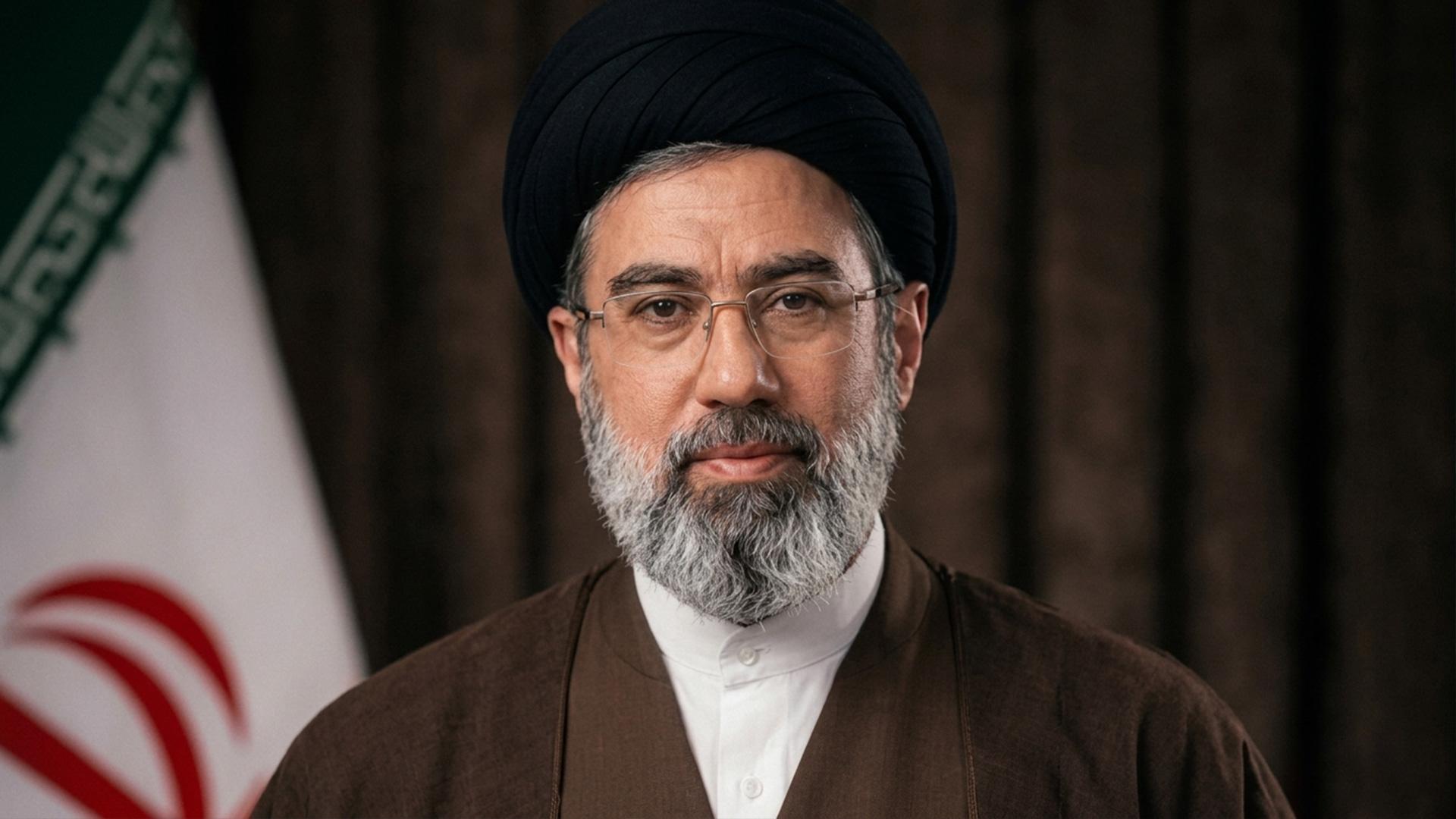
In two major messages issued within days of each other, Ayatollah Sayyid Mojtaba Khamenei set out a closely connected political and social message: Iran must protect its internal cohesion and build its strength, while the wider Muslim world must overcome its divisions and recognise the common threats confronting it.
Iran’s Leader Ayatollah Sayyid Mojtaba Khamenei issued two significant messages this week, one marking Government Week and another marking Islamic Unity Week.
Although addressed to different audiences, the two statements were closely connected. The first focused primarily on strengthening Iran from within, while the second extended the same principle of unity to the Muslim Ummah as a whole.
A Stronger Iran Requires Social Cohesion
In his Government Week message, Ayatollah Khamenei thanked President Masoud Pezeshkian and government officials for their work under intensified sanctions, economic pressure and the consequences of the recent war.
Much of the message, however, went beyond the government itself and addressed the wider question of how Iran should navigate an increasingly hostile environment.
Ayatollah Khamenei argued that building a “stronger-than-ever Iran” requires both practical work and a clearer understanding of the country’s strengths. Weaknesses, he said, should be identified and corrected rather than constantly amplified in a way that demoralises the public or encourages Iran’s enemies.
At the same time, he did not minimise Iran’s economic difficulties. He identified inflation, unemployment, prices, investment and production as major challenges requiring sustained government attention.
His proposed direction centred on strengthening domestic production, directing investment towards productive sectors, implementing the principles of the resistance economy and gradually reducing the dollar’s importance within Iran’s economy.
Imports, he argued, should continue where domestic production cannot adequately meet demand, but they should be carefully managed in order to protect national production.
Ayatollah Khamenei also placed emphasis on technological innovation and the ideas of young Iranian specialists. He argued that abandoning outdated bureaucratic methods and making greater use of new technologies could generate significant advances across industry, agriculture, culture and communications.
Perhaps the strongest part of the message, however, concerned national unity.
Ayatollah Khamenei said major decisions in the political, economic, cultural, social and security fields should take account of their impact on social cohesion.
He also warned against political rhetoric that damages public morale or divides Iranian society into artificial camps.
In particular, he criticised binaries such as “war or negotiations”, “consensus or extremism” and “compromise or warmongering”, arguing that anything which damages Iran’s social cohesion should be avoided.
From Iranian Unity to Islamic Unity
Two days later, Ayatollah Khamenei developed the same argument on a much wider scale.
In his message marking the birth anniversaries of the Prophet Muhammad (s) and Imam Ja‘far al-Sadiq (as), he presented Muslim unity not simply as a ceremonial slogan associated with Unity Week, but as a fundamental Qur’anic strategy.
Ayatollah Khamenei argued that the Muslim world has reached an important historical moment in which it possesses the potential to play a far greater role internationally.
The first condition for doing so, he said, is Muslim unity and the prioritisation of shared principles over differences.
He warned that Muslim societies can be divided through far more than sectarian differences alone. Ethnic, political, cultural, economic, social and geographical disputes can all be exploited to fragment Muslim populations and weaken their collective power.
Those who deepen such divisions, he warned, can therefore advance the objectives of Islam’s enemies, whether knowingly or unknowingly.
The message then turned directly to Palestine and the governments of West Asia and the Persian Gulf.
Ayatollah Khamenei asked whether Palestinians would have been left so vulnerable to the crimes of the occupying regime had the Muslim world acted as a united force.
He similarly questioned whether outside powers would be able to threaten the countries of the Persian Gulf so easily if their governments and peoples were united within a broader Islamic framework.
His warning to regional rulers was direct: they must recognise the real enemy.
Ayatollah Khamenei described the United States and the Zionist regime as enemies not simply of Iran or the Islamic Resistance, but of the wider Muslim Ummah, including governments which currently maintain close relations with Washington and Tel Aviv.
He proposed three interconnected principles for the Islamic world: unity among Muslims, mutual defence against external aggression, and deeper cooperation in fields including wealth, security, science and development.
The longer-term objective, he said, should be the emergence of a new Islamic civilisation.
One Message at Two Levels
Read together, the two statements provide a clearer picture of Ayatollah Khamenei’s current emphasis.
Internally, Iran is being urged to resist political fragmentation, strengthen domestic production, develop technological independence and avoid narratives which weaken national confidence.
Regionally, the same principle is extended to the wider Muslim world.
Disputes between Muslim states and communities, Ayatollah Khamenei argues, should not obscure the larger geopolitical confrontation with powers seeking to dominate the region and weaken independent Muslim states.
Significantly, the Unity Week message concludes by returning once again to Iran, with Ayatollah Khamenei urging Iranians themselves to prevent divisions from emerging among them.
The two messages therefore appear less like separate statements for separate occasions and more like two parts of the same political outlook: internal cohesion as the foundation of Iranian strength, and Islamic solidarity as the foundation of a stronger and more independent Muslim world.