
Italy’s government has approved a new decree banning face coverings including the burqa and niqab in schools, while imposing limits on some foreign pupils in classrooms and fines on parents who fail to attend Italian-language courses.
The measures were approved by Prime Minister Giorgia Meloni’s Council of Ministers on 24 September, days after she first announced the plans at a gathering of the youth wing of her Brothers of Italy party. They are expected to take effect from the 2027–28 school year, subject to the parliamentary process.
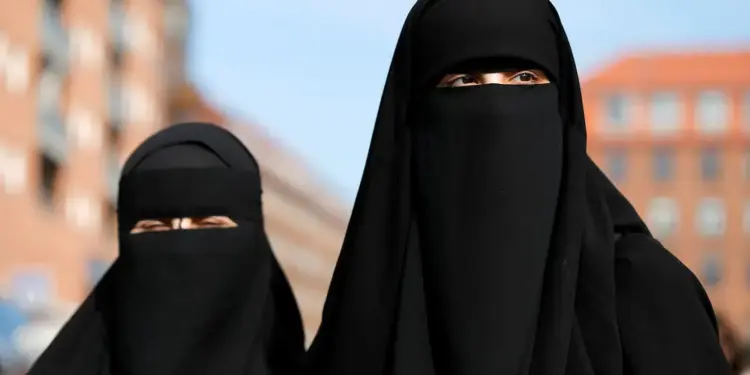
The decree prohibits participation in school activities with the face covered in a way that prevents identification, except for specified health or security reasons. Although the text is written more broadly, Meloni explicitly presented the measure as a ban on the Islamic burqa and niqab.
Violations can result in fines ranging from €200 to €1,000. Where the person covering their face is a minor, the penalty can fall on their parents. The hijab, which covers the hair but leaves the face visible, is not included in the ban.
Meloni defended the policy as necessary for what she described as genuine integration.
“School is attended with one’s face uncovered,” she said when unveiling the proposals, arguing that no tradition should oblige a young woman to conceal herself.
Her government says the measures are intended to prevent what it calls “ghetto classrooms” and ensure that pupils begin school on a more equal footing.
30 per cent limit on some foreign pupils
The decree also introduces a 30 per cent ceiling in first-year classes, although the restriction is narrower than an outright cap on all foreign children.
In primary schools, the threshold applies to pupils who do not hold Italian citizenship and who were neither born in Italy nor attended at least two years of Italian nursery school.
For lower and upper secondary schools, it applies to non-Italian pupils who have not successfully completed at least three years within Italy’s education system.
This distinction significantly reduces the number of children likely to be affected.
Nearly 65 per cent of foreign pupils in Italy were born in the country. Based on current enrolment patterns, experts estimate that the new classroom ceiling may directly affect only several hundred pupils nationally, and probably fewer than 1,000.
Around 11.6 per cent of pupils in Italian schools are non-citizens.
Parents could also face fines
Another part of the decree targets families where language difficulties are judged to be affecting a pupil’s education.
Schools will be expected to report cases involving serious language barriers to social services, which can then arrange free Italian-language courses for the parents.
Education Minister Giuseppe Valditara said parents who fail to complete the required programme could be fined between €200 and €1,000.
An earlier draft attracted particular controversy after reportedly including the possibility of removing children from families that failed to comply. That provision was subsequently replaced by financial penalties in the version described by Valditara following the cabinet meeting.
Muslim dress placed at centre of integration debate
Although the legislation formally speaks about concealed faces, the political debate surrounding it has focused overwhelmingly on Muslim women.
The burqa and niqab are believed to be worn by only a relatively small number of women in Italy, with estimates in the Italian media putting the figure at roughly 500 to 600 nationwide.
That has raised questions over whether the practical effect of the ban is proportionate to the political attention being given to it.
Constitutional law specialists have also raised concerns about both religious freedom and equal access to education.
Professor Alfonso Celotto of Roma Tre University said the decree raises constitutional questions involving equality and religious liberty, while other legal experts have warned that transferring pupils away from their local schools to meet classroom limits could itself make integration more difficult.
Opposition politicians and education groups have accused the Meloni government of using schools to wage a broader political battle over immigration and national identity.
The government rejects that argument, insisting the measures are designed to encourage language acquisition and integration rather than discriminate against migrant communities.
The decree comes ahead of Italy’s next general election, with immigration and integration becoming increasingly prominent issues and Meloni also facing political pressure from parties and figures further to her right.
For Italy’s Muslim communities, the most immediate consequence is the formal exclusion of the niqab and burqa from schools.
But the wider significance of the decree lies in the way Muslim dress, migration, language and national identity are increasingly being treated as part of the same political debate — even where the number of people directly affected by some of the measures remains comparatively small.