
At least 20 members of Iraq’s Popular Mobilisation Forces were martyred in coordinated US–Saudi airstrikes, marking a dangerous expansion of the regional war and placing Saudi Arabia directly on the front line of Washington’s campaign against the resistance axis.
BAGHDAD — The United States and Saudi Arabia carried out coordinated airstrikes against bases and weapons depots belonging to Iraq’s Popular Mobilisation Forces, also known as Hashd al-Sha’abi, early on Wednesday.
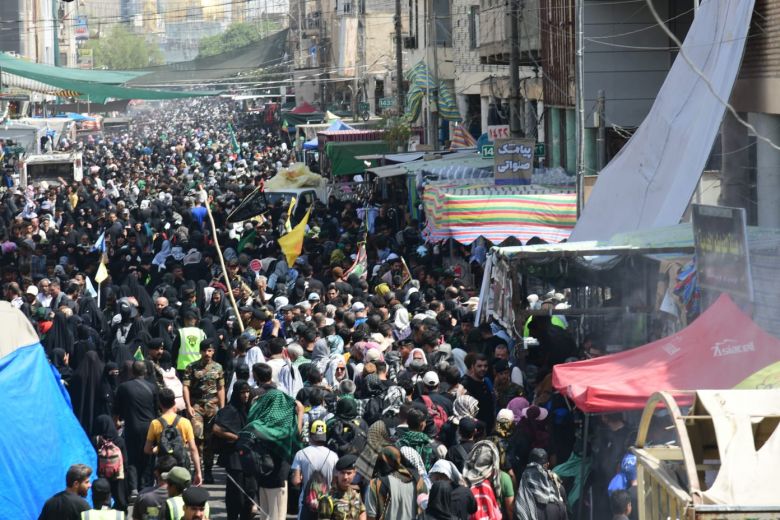
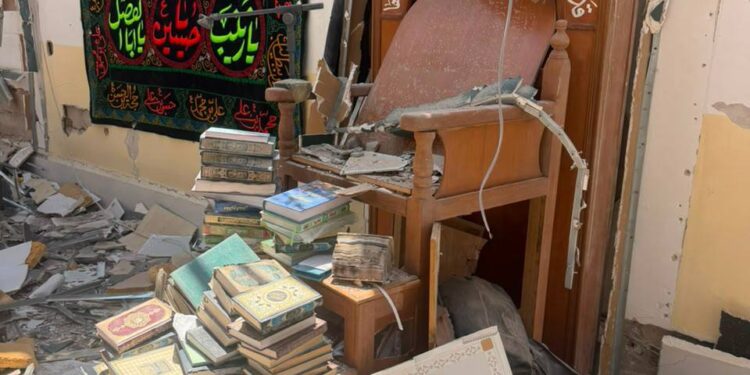
The Hashd said at least 20 of its members were martyred and 32 others wounded in the attacks, which struck facilities across several Iraqi provinces. The organisation said its headquarters, military vehicles and equipment had sustained extensive damage.
US Central Command confirmed that American and Saudi fighter aircraft had conducted the operation on 28 July, targeting what it described as logistical and weapons sites across eastern Iraq. CENTCOM alleged that the strikes were retaliation for more than 30 drone attacks against US forces and Saudi energy infrastructure during the previous 72 hours.
The Hashd al-Sha’abi is not an unofficial foreign militia, as much of the Western press routinely suggests, but a state-recognised component of Iraq’s security establishment. Its formations played a decisive role in defeating Daesh after the terrorist organisation seized large areas of Iraq in 2014.
According to the Hashd, locations in Baghdad, Wasit, Nineveh, Basra, Kirkuk, Karbala and Diyala were among those targeted. Further reports indicated strikes around Jurf al-Nasr in Babil Province, although some of the reported locations have not yet been independently confirmed.
Resistance rejected Saudi accusations
The Islamic Resistance in Iraq had denied Saudi allegations that recent attacks on the kingdom’s oil infrastructure originated from Iraqi territory.
In a statement issued on Monday, the resistance described Riyadh’s accusations as “baseless”, saying Saudi authorities were attempting to conceal their inability to confront operations carried out by Yemen’s resistance forces.
The statement warned that any Saudi military action against Iraq would face a decisive response and called on Riyadh to end its blockade and aggression against Yemen rather than blame Iraqi resistance organisations.
Saudi Arabia placed on Washington’s front line
The joint operation represents more than another American attack on Iraq. It marks Saudi Arabia’s open transformation from a supporter of US regional policy into a direct military participant.
From a critical reading, the Trump administration appears determined to place Saudi soldiers, military bases and infrastructure in the path of resistance retaliation rather than expose greater numbers of American personnel.
Drawing on his instincts as a businessman, Trump appears to have devised a calculated equation: Washington supplies the weapons, intelligence and political direction, while Riyadh provides the territory, personnel and funding. Saudi Arabia signed a defence agreement worth nearly $142 billion with the United States in 2025, while further multibillion-dollar missile and air-defence sales were approved during 2026.
The arrangement means Saudi funds purchase much of the American-made equipment used by the kingdom. Should aircraft, missiles or air-defence systems be depleted or destroyed in an expanding confrontation, Riyadh—not only the Pentagon—will be expected to finance their replacement, generating further profits for the US arms industry.
Trump’s strategy therefore allows Washington to widen its war while transferring a significant share of its financial and human risks onto a subordinate regional partner.
Saudi Arabia is functioning as a US proxy: carrying out Washington’s military objectives, purchasing American weapons and exposing its own population and infrastructure to the consequences.
For Riyadh, the lesson should be clear. Even mainstream Western foreign-policy institutions, including Brookings, the Council on Foreign Relations and Chatham House, have warned that Trump’s transactional and unpredictable approach has left US partners questioning whether Washington can still be trusted as a dependable ally. Saudi Arabia may serve American interests, fund American weapons and expose its own territory to retaliation, but history suggests that Washington’s subordinates are supported only for as long as they remain useful—and abandoned when the political cost becomes too high.