
A report published by The Telegraph and repeated by GB News claims that the Islamic Centre of England has been given the “right to bring migrants to Britain”. The wording suggests a new and alarming development. What it fails to emphasise is that the Centre has been on the relevant sponsor list since 1998.
On 26 July 2026, The Telegraph published an article titled “Iran’s ‘propaganda charity’ given right to bring migrants to UK”. The story was repeated by GB News on 27 July under the headline “Muslim charity with close ties to Iran’s regime given rights to bring ‘skilled workers’ and religious ministers to Britain”.
Both reports claim that the Islamic Centre of England has been given the “right to bring migrants to Britain”. The wording suggests a new and alarming development. What it fails to emphasise is that the Centre has been on the relevant sponsor list since 1998.
This is not a new immigration power. It is a long-standing arrangement that has been repackaged as a fresh revelation and used to fuel yet another scare story about a Muslim institution.
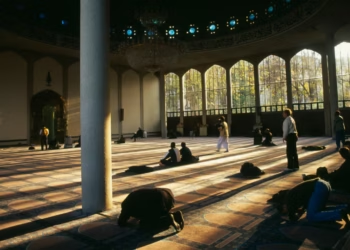
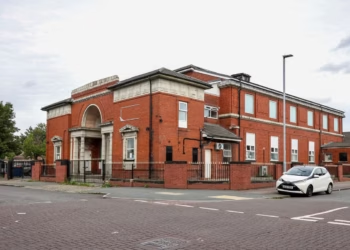
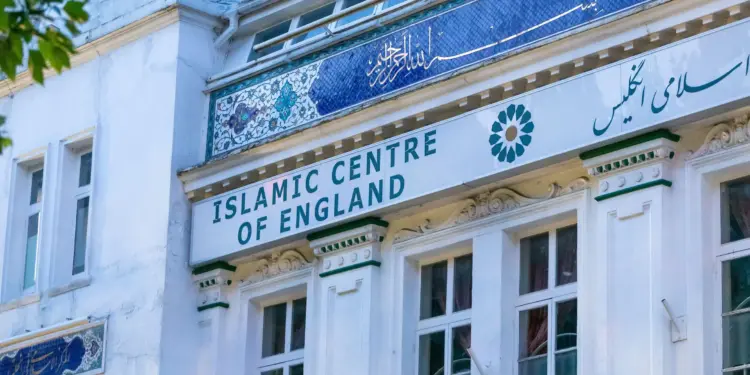
The Islamic Centre officially opened in Maida Vale in 1998 and has served Britain’s Shia Muslim community for nearly three decades. It provides prayers, lectures, religious commemorations, education and family programmes in English, Persian and Arabic.
Many worshippers are British Iranians or Iranians living in Britain who regard the Centre as their main place of worship. It is where they pray, observe religious occasions, educate their children and gather as a community.
That human reality is largely absent from The Telegraph’s coverage. Instead, the Centre is reduced to politically loaded labels such as an Iranian “outpost” and “propaganda charity”. This is a familiar Islamophobic tactic: ordinary Muslim religious activity is presented as suspicious, foreign or threatening.
Holding a sponsor licence does not allow the Centre to decide who enters Britain. It permits the organisation to support a visa application for an eligible worker, such as a qualified religious minister. Every applicant must still meet Home Office requirements, and the Government can refuse the visa or withdraw the Centre’s licence if the rules are broken.
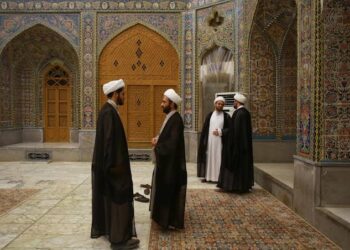
Churches, mosques, synagogues and temples use the same system when recruiting ministers with particular theological training or language skills. Presenting this regulated process as a “right to bring migrants” turns an ordinary administrative arrangement into an immigration scare story.
Among Muslims, and particularly within the Shia and Iranian communities, frustration is growing. Worshippers are increasingly tired of seeing their mosque subjected to sleazy attacks in which allegations, loaded language and misinformation are assembled to create the appearance of a new scandal.
Its prayers, educational work and community services are continually pushed aside so that the Centre can be placed inside a wider narrative about national security. The message conveyed is that a Muslim institution with an Iranian congregation should always be viewed with suspicion.
This coverage does not exist in a political vacuum. Pro-Israel and anti-Iran pressure groups have a clear interest in weakening Muslim institutions that criticise Israel or support Palestine and the regional resistance movement. Their language and priorities are regularly adopted by sections of the British press, including The Telegraph and GB News.
The Islamic Centre should be held to the same laws as every other charity. It should not, however, be subjected to a different and openly hostile media standard because it is a Shia Muslim institution with a large Iranian congregation.
Recycling a sponsorship arrangement that has existed for decades is not a major exposé. It is another Islamophobic attempt to manufacture suspicion around a British Muslim institution without presenting evidence of any new wrongdoing. The community is right to be tired of it.