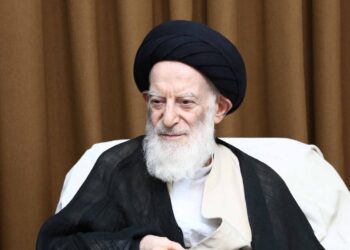

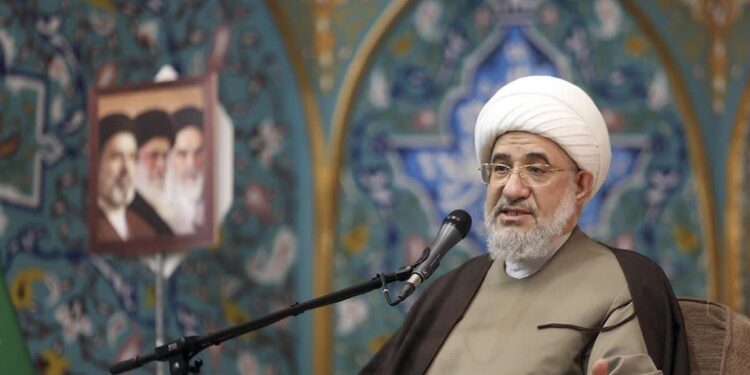
Senior scholar Ayatollah Sheikh Mohsen Araki from the Hawza Ilmiyya of Qom has issued a strongly worded religious statement warning that if the Iraqi government continues what he described as a policy of submission to the United States, Muslims would be forbidden from dealing with it as a legitimate system.
The statement centres on the Iraqi authorities’ obstruction of pilgrims seeking to visit the shrines of Amir al-Mu’minin Imam Ali (a) and Imam Hussain (a), with Ayatollah Araki describing the issue in explicitly religious terms.
Rather than treating the matter simply as a political disagreement, the senior scholar warned that continued submission to American demands could affect the religious status of the Iraqi government itself.
Full statement
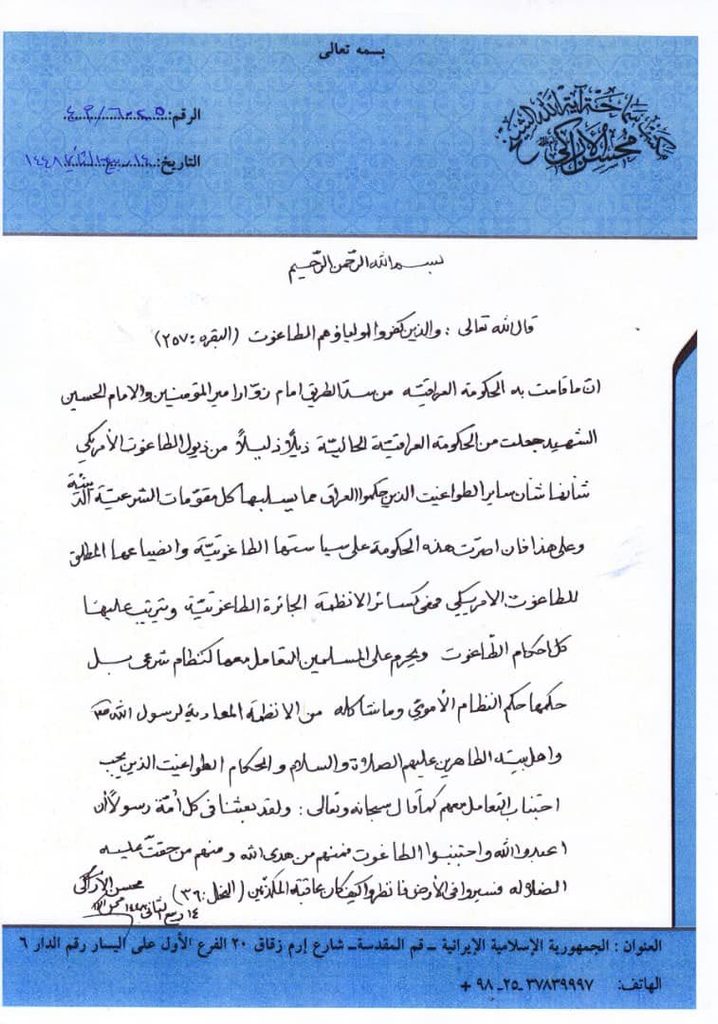
The following is a translation of Ayatollah Araki’s statement:
In the Name of Allah, the Most Compassionate, the Most Merciful.
Allah Almighty says:
“As for those who disbelieve, their guardians are the Taghut.”
— Surah al-Baqarah, 2:257
What the Iraqi government has done by blocking the way of the pilgrims of Amir al-Mu’minin and Imam Hussain, the Martyr (peace be upon them), is considered an act by which the present Iraqi government has entered into obedience to the United States.
There is no doubt that this action constitutes obedience to the Taghut, which is prohibited by the clear texts of the Islamic Sharia.
If this government persists in its Taghuti policy and its absolute submission to the American Taghut — meaning, like other oppressive Taghuti regimes — then all the rulings pertaining to Taghut will apply to it, and it will be forbidden for Muslims to deal with it as a legitimate system.
Rather, the ruling upon it would be that of the Umayyad system and its like, which opposed the Messenger of Allah (s) and his pure Ahl al-Bayt (a).
Allah Almighty says:
“And We certainly sent into every nation a messenger, [saying], ‘Worship Allah and avoid Taghut.’”
— Surah al-Nahl, 16:36
Mohsen Araki
14 Rabi al-Thani 1448 AH
‘All the rulings pertaining to Taghut will apply’
Ayatollah Araki’s statement represents an unusually severe religious warning directed towards the Iraqi government.
At the heart of the statement is the concept of Taghut. In Qur’anic terminology, the term refers to an authority or object of obedience that transgresses the limits established by Allah and stands in opposition to divine authority.
Ayatollah Araki argues that obedience to the United States in preventing pilgrims from reaching the shrines of the Ahl al-Bayt (a) would therefore not constitute merely an objectionable foreign-policy decision, but an act of obedience to Taghut.
His warning becomes particularly significant when he states that, should such a policy continue, “all the rulings pertaining to Taghut” would apply to the Iraqi government and Muslims would be forbidden from dealing with it as a legitimate system.
Comparison with Umayyad rule
Ayatollah Araki goes further by invoking one of the most consequential historical comparisons in Shia Islam, saying that the ruling applicable to such a government would become comparable to that of the Umayyad system.
The Umayyad dynasty is associated in Shia history with the persecution of the Ahl al-Bayt (a), culminating in the martyrdom of Imam Hussain (a), his family members and companions at Karbala in 61 AH.
The comparison therefore gives the statement considerable religious weight.
Ayatollah Araki concludes by citing the Qur’anic command contained in Surah al-Nahl: “Worship Allah and avoid Taghut.”
The statement places the controversy within the wider question of Iraqi sovereignty and American influence over Baghdad. Iraq remains home to some of the holiest sites in the Shia Muslim world, including Najaf, Karbala, Kadhimiyya and Samarra, and millions of Muslims travel to the country each year to visit the shrines of the Ahl al-Bayt (a).
Ayatollah Araki’s intervention makes clear that, in his view, preventing access to those shrines at the behest of Washington crosses a line beyond ordinary politics — raising a fundamental question about obedience, sovereignty and the religious legitimacy of political authority.