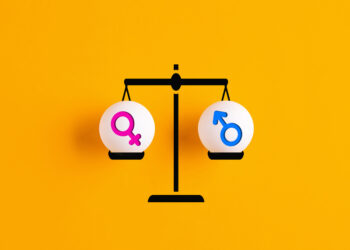

Islam does not approach men and women as rivals competing for identical positions. It recognises their equal human value while acknowledging the different qualities through which each contributes to the family and society.
Modern discussions about gender are often framed around the assumption that equality requires men and women to become increasingly alike. From an Islamic perspective, however, equality does not necessarily mean sameness.
Men and women share the same spiritual origin, moral responsibility and capacity to attain nearness to Allah. Yet they may possess different physical, emotional and psychological qualities. These differences are not presented as evidence of superiority or inferiority, but as part of a divinely ordered balance.
An excerpt from The Compassionate Family, by the martyred leader Ayatollah Khamenei, describes the relationship between the two sexes as comparable to a carefully arranged garden. Each part has its own place and purpose. Attempting to erase every distinction may not produce justice, but instead disturb the balance upon which family life depends.
Strength and Tranquillity
Within the Islamic family, the husband is expected to provide security, reliability and support. His strength is not meant to become an instrument of domination, but a source of protection and stability.
A wife, meanwhile, is described as a source of affection, tenderness and emotional tranquillity. Through love, understanding and compassion, she can transform the home into a place of rest from the pressures of the outside world.
These descriptions are not intended to imprison either gender within rigid stereotypes. A woman may be highly educated, professionally successful and socially active. A man may be gentle, emotionally sensitive and deeply involved in raising his children.
The central point is that the family benefits when strength is combined with mercy, and responsibility is accompanied by affection.
Both contributions are indispensable. Material protection without tenderness can produce a cold and authoritarian home. Emotional affection without reliability and responsibility can leave a family insecure.
Islam therefore presents marriage as a partnership in which the different qualities of husband and wife complete one another.
When Natural Qualities Are Misused
The harmony envisioned by Islam can be damaged when either spouse misuses their position.
A husband may destroy his wife’s emotional warmth through bad temper, humiliation, unreasonable demands or by treating her as a household employee. When a woman is constantly belittled or overburdened, she may no longer feel able to offer the peace and affection that should characterise the marital relationship.
Similarly, a wife may weaken her husband’s sense of responsibility by constantly mocking him, dismissing his judgement or treating him merely as a labourer whose value is measured only by what he earns or provides.
In both cases, the problem is not masculinity or femininity themselves. The problem is the corruption of those qualities through selfishness, injustice and poor character.
Islamic family ethics therefore cannot be reduced to a list of rights demanded from the other person. They must also include good manners, self-restraint, gratitude and an awareness of one’s duties before Allah.
“A Flower, Not a Servant”
One of the most important Islamic descriptions of women appears in a letter attributed to Imam Ali (a) and addressed to his son Imam Hasan (a):
“A woman is a flower, not a chambermaid.”
The Arabic word rayḥānah refers to something fragrant, delicate and precious. A flower is not preserved by crushing it or handling it harshly. It flourishes when it is protected and treated with care.
The second part of the saying rejects the idea that a wife is merely a servant, employee or household manager under the command of her husband.
Marriage does not make a man his wife’s employer. Nor should domestic work, childcare and the organisation of the home automatically be treated as burdens that belong exclusively to women.
A husband who expects his wife to carry every domestic responsibility while he remains detached from the home has misunderstood Islamic leadership. Authority in Islam is inseparable from accountability, service and sacrifice.
Equality Does Not Require Sameness
Islamic teachings maintain that different roles can possess equal value.
Contemporary societies often measure status through income, public visibility, professional rank and political influence. As a result, work performed inside the home can be treated as less valuable than paid employment.
Islam challenges this materialistic standard.
Raising morally grounded children, protecting the emotional health of a family and creating a stable home are not minor activities. They shape the future of communities and civilisations.
At the same time, Islamic thought does not deny women access to education, intellectual development, economic activity or public participation. Women must not be prevented from developing their abilities merely because they are women.
The mistake lies at both extremes: confining women through ignorance and oppression, or suggesting that a woman can only be respected when she imitates the social role of a man.
True dignity comes from fulfilling one’s responsibilities before Allah, not from conforming to the expectations of a consumer-driven society.
Islam Opposes the Oppression of Women
Physical differences between men and women have frequently been exploited throughout history. In societies without strong moral and legal protections, greater physical power can become a means of control.
Islam therefore places limits upon power. A man’s physical strength does not prove that he is wiser, more intelligent or more capable of leadership in every area of life.
Men and women may both possess intellectual, political, academic, economic and managerial abilities. Such skills are developed through education, experience and participation rather than determined solely by gender.
Where women have been excluded from learning and public life, their apparent absence from certain fields cannot honestly be presented as evidence of natural inability. Preventing people from developing their abilities and then blaming them for lacking experience is itself a form of injustice.
Islamic society must therefore protect women from physical, financial and emotional abuse while ensuring that they have access to knowledge and the opportunity to develop their talents.
The Limits of Western Gender Politics
Western societies frequently present themselves as having liberated women. Yet public visibility and sexual permissiveness do not automatically protect women from violence, exploitation or discrimination.
A culture may speak extensively about women’s freedom while simultaneously using the female body to sell products, entertain audiences and satisfy male desire.
From an Islamic perspective, encouraging women to display themselves for public consumption is not necessarily liberation. It may instead represent another form of male-centred exploitation, disguised through the language of choice.
The hijab should therefore not be viewed simply as a piece of clothing. It belongs to a broader Islamic ethic in which human beings are not reduced to physical appearance or sexual attraction.
However, modest clothing alone is not enough. A society cannot claim to honour women while tolerating domestic abuse, denying education or treating wives as unpaid servants.
Islamic modesty must be accompanied by justice, knowledge and ethical conduct.
Three Foundations for Justice
The text identifies three essential means of preventing oppression between men and women.
The first is law. Society must establish rules that protect the vulnerable, prevent abuse and hold aggressors accountable.
The second is education and intellectual development. Women must have access to literacy, scholarship, professional skills and social awareness. Knowledge helps individuals recognise exploitation and defend their legitimate rights.
The third is the moral and intellectual development of society as a whole. Laws can punish abuse after it occurs, but spiritual and ethical education can prevent people from becoming abusers in the first place.
A society shaped by taqwa, wisdom and responsibility will not view relationships as struggles for control. It will understand strength as a trust from Allah and compassion as a form of power.
A Partnership Built on Responsibility
The Islamic vision of gender is neither a battle between men and women nor an attempt to erase their differences.
It is a moral partnership.
Men are called to use their strength to protect rather than dominate. Women are called to use their insight, affection and wisdom to strengthen the family rather than manipulate it. Both are required to pursue knowledge, resist injustice and refine their character.
The family succeeds when neither spouse treats the other as a competitor, servant or possession.
Its foundation is the Qur’anic principle of affection and mercy: two people, with different qualities and shared human dignity, working together in obedience to Allah.