
Five months into Washington’s war on Iran, an increasingly uncomfortable reality is emerging from inside the United States itself: American military power may be enormous, but its most sophisticated weapons are running out.
Reuters reported that the US Army has used “virtually all” of its available ATACMS and Precision Strike Missiles (PrSM) during the war, according to officials familiar with military inventory data. The United States has also consumed slightly less than half of its global Tomahawk cruise missile stockpile, one source said.
The significance goes far beyond the war with Iran. These are precisely the kinds of long-range weapons Washington would expect to rely upon in any confrontation with a major power such as China.
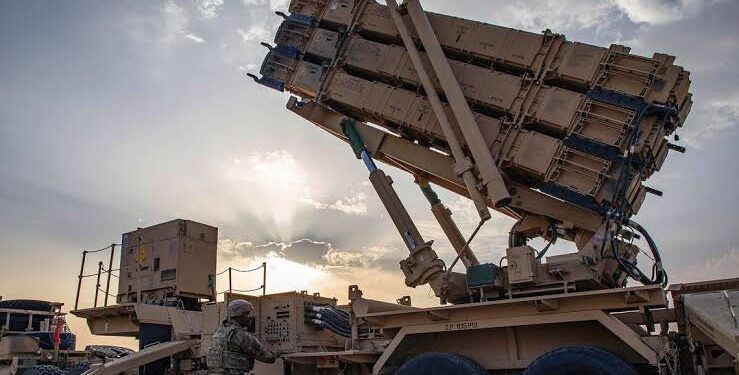
At the same time, America’s defensive arsenal has been placed under extraordinary pressure by months of Iranian ballistic missile and drone attacks.
Estimates differ because the Pentagon keeps exact inventories classified. A CSIS assessment estimated that Patriot interceptor stocks had fallen by at least 65 per cent since the beginning of the war, while THAAD inventories were at least 38 per cent lower. CNN separately reported that nearly 80 per cent of the US THAAD interceptor stockpile and roughly half of its Patriot interceptors had been consumed, with senior commanders describing inventories as “dangerously low”.
Whatever the precise percentage, Washington’s behaviour suggests the problem is serious.
The Pentagon has ordered defence manufacturers to dramatically accelerate production. Deputy Defense Secretary Steve Feinberg gave industry leaders just 21 days to produce plans for faster delivery and increased manufacturing of critical weapons, warning that years-long production cycles were no longer acceptable. Analysts have estimated that restoring some Patriot and THAAD inventories to their pre-war levels could take years rather than months.
From battlefield problem to strategic problem
This is not simply a question of whether the United States has enough missiles to continue bombing Iran.
Washington almost certainly does.
The deeper concern is what happens if another major confrontation begins while American weapons warehouses are still being rebuilt.
CSIS argues that the Iran war has intensified a problem decades in the making. America’s post-Cold War military-industrial system was constructed largely around efficient peacetime production rather than the rapid replacement of thousands of missiles during a prolonged war. Munitions have also traditionally competed poorly for Pentagon funding against highly visible platforms such as aircraft and warships.
That calculation changes when sophisticated missiles are being fired faster than factories can replace them.
The issue appears to have reached the highest levels of the Trump administration.
The Washington Post reported that President Donald Trump confronted Defence Secretary Pete Hegseth at Camp David after discovering that shortages had not been resolved, telling him he believed the munitions problem “had been fixed”. Reports have suggested depleted defensive and long-range missile inventories have also become a factor when Washington considers further large-scale attacks against Iran. The White House and Pentagon have disputed accounts of internal tensions.
Trump has publicly dismissed claims of serious shortages, insisting the United States possesses massive quantities of weapons. Yet the administration is simultaneously pushing manufacturers to increase production at extraordinary speed and seeking tens of billions of dollars to replace expended munitions.
Tehran understood the equation
Iran appears to have recognised this vulnerability from an early stage of the conflict.
The Islamic Republic cannot compete with the United States aircraft-for-aircraft or dollar-for-dollar. Instead, decades of sanctions pushed Tehran towards a military structure centred on domestically manufactured ballistic missiles, cruise missiles and drones that could be produced and deployed in significant numbers.
The resulting equation increasingly resembles a war of industrial attrition.
Iran does not necessarily need every missile or drone to penetrate American defences. It needs to force its opponents to keep radars operating, aircraft airborne and expensive interceptors ready — repeatedly and over a prolonged period.
The IRGC itself has openly referred to this calculation.
In March, IRGC spokesman Ali Mohammad Naeini told the Americans that Iran knew their ammunition reserves were being depleted. IRGC Aerospace Force commander Majid Mousavi later argued that Iran was replacing its missile and drone capabilities more quickly than Washington could replenish weapons flowing into the region.
More revealingly, when announcing an operation against a US base in Kuwait on 23 July, the IRGC said it would not allow Washington to use temporary ceasefires to rebuild its oil and munitions reserves before restarting the war.
This suggests ammunition consumption is not merely a side effect of Iran’s strategy. Tehran increasingly sees it as part of the battlefield itself.
‘A waiting game’
University of Tehran professor and prominent pro-Iran commentator Seyed Mohammad Marandi has described Iran’s strategy in precisely these terms.
Marandi argues that Tehran is playing a “waiting game”, absorbing pressure while attempting to impose greater military and economic costs on Washington over time. Discussing reports of dwindling American stocks, he said US anti-missile and anti-drone munitions that Washington had previously boasted about were now being depleted.

For Marandi, the consequence is larger than the number of missiles sitting inside warehouses. He argues that the conflict is eroding the perception of overwhelming American power itself.
Iranian media have reached similar conclusions. Kayhan has described Pentagon weapons reserves as “running dry”, while Tasnim has repeatedly highlighted reports concerning Patriot, THAAD and Tomahawk depletion. Even Iran International, a strongly anti-Islamic Republic outlet, acknowledged that beneath Tehran’s propaganda lies a genuine strategic argument: Iran can impose disproportionate costs by forcing the US to expend weapons that are vastly more expensive and slower to manufacture.
That distinction matters.
America has not become militarily powerless, nor has it literally run out of weapons. Its advantages in aviation, intelligence, logistics and precision warfare remain immense.
But Iran may have demonstrated something potentially more important for weaker states confronting American military power: technological superiority does not automatically translate into unlimited endurance.
Every Patriot fired, every THAAD launched and every Tomahawk removed from an American magazine must eventually be replaced.
And while Washington can print dollars relatively quickly, it cannot print missiles.
The war has therefore become more than a confrontation between American and Iranian firepower. It is increasingly a contest between two fundamentally different models of warfare — one built around extraordinarily sophisticated and expensive weapons, and another built around resilience, dispersal, domestic production and the ability to keep fighting.
For Tehran, simply surviving the initial US-Israeli assault was never the end of that strategy.
The longer Iran can remain capable of launching missiles, threatening American positions and forcing Washington to consume scarce interceptors, the more the balance shifts from a contest over who possesses the most powerful weapons to a far more uncomfortable question for the Pentagon:
Who can replace them fastest?