
The United States has lifted sanctions on an Iraqi airline previously accused of supporting Iran’s Islamic Revolutionary Guard Corps (IRGC), in a move that comes as President Donald Trump appears increasingly desperate to secure an agreement with Tehran and bring an end to months of regional confrontation.
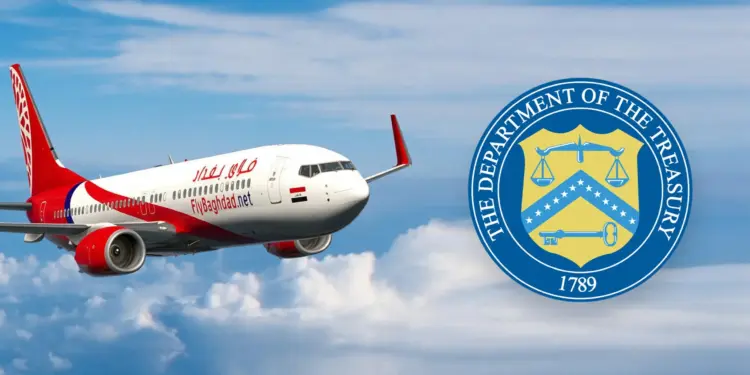
The US Treasury Department announced on Wednesday that it had removed Fly Baghdad Airlines, also known as Iraq Express, and two Boeing 737 aircraft from its sanctions list.
The Iraqi carrier was sanctioned in January 2024 after Washington accused it of providing assistance to the IRGC’s Quds Force and allied resistance groups in Iraq, Syria and Lebanon.
A US Treasury official claimed the airline had made “major changes” to its operations and had addressed the conduct that led to the original designation. However, Washington did not provide details about what had changed or what commitments Fly Baghdad had made.
The Treasury official also insisted that the decision was unrelated to negotiations with Iran and did not represent a change in US policy towards the Islamic Republic or the IRGC.
However, the timing of the decision has raised questions.
The delisting comes as Washington attempts to reach an understanding with Tehran over the Strait of Hormuz and the wider conflict in the Gulf. Iran has repeatedly made clear that meaningful sanctions relief must form part of any wider settlement with the United States.
Although Fly Baghdad is an Iraqi company rather than an Iranian state institution, lifting sanctions on an entity previously accused of links to the Quds Force could be interpreted as a limited confidence-building gesture.
It allows Washington to offer a small but visible concession without immediately removing the central sanctions imposed directly on Iran.
Trump talks up imminent agreement
Trump said this week that the United States and Iran had held “very good discussions”, claiming that a deal could be reached within days.
Iranian officials, however, have not confirmed direct negotiations with Washington. Tehran has instead confirmed talks with Oman concerning arrangements for shipping through the Strait of Hormuz.
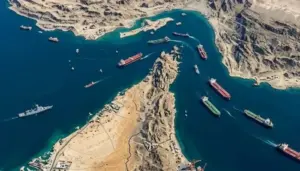
Iran and Oman have reportedly reached an understanding over the geographical coordinates of a proposed shipping route through the strategic waterway. According to Iranian and regional sources, the wider proposal could give Tehran a role in controlling or supervising vessels entering the Gulf through the strait.
Such an outcome would represent a major reversal for Washington.
The United States has historically rejected any Iranian authority over the Strait of Hormuz. Yet after months of military confrontation, American pressure has failed to break Iran’s control over the waterway.
Trump began the conflict speaking about Iran’s “unconditional surrender”. He is now publicly promoting negotiations and repeatedly predicting an imminent settlement.
Analysis: Washington’s pressure campaign has failed
The sanctions decision should be understood within the wider failure of the US-Israeli military campaign to force Iran into submission.
Despite extensive strikes and economic pressure, Iran has retained the ability to disrupt one of the world’s most important energy routes. US military commanders have also reportedly warned of shortages in certain categories of precision weapons, while American public opposition to the war has grown.
Reuters reported that US voters oppose the conflict by approximately two to one ahead of November’s midterm elections. The US Army has also reportedly used almost all of its available long-range precision missiles.
These pressures have left Trump searching for an exit.
His public statements continue to combine threats with exaggerated optimism. While claiming that negotiations are proceeding well, Trump has simultaneously warned that Iran will be struck “really hard” if it withdraws.
This contradictory language reflects an administration attempting to preserve the image of strength while quietly offering incentives to Tehran.
The removal of sanctions on Fly Baghdad may therefore represent part of a broader attempt to entice Iran towards an agreement without allowing Trump to openly acknowledge that Washington is making concessions.
US officials deny any connection between the delisting and negotiations, but the political context is difficult to ignore. The decision was announced at precisely the moment when Trump is trying to demonstrate progress towards reopening the Strait of Hormuz and ending a conflict that has placed growing pressure on the US military, global energy supplies and his own domestic political standing.
Iran, meanwhile, appears unwilling to accept vague promises.
Tehran has demanded concrete guarantees, the fulfilment of previous US commitments and recognition of its security interests. Iranian officials have also rejected Trump’s suggestion that a final deal is already imminent, indicating that significant disagreements remain.
The latest development therefore does not amount to a broad removal of sanctions on Iran. But it may be an early indication that Washington recognises military threats alone will not produce an agreement.
After attempting to force Tehran to surrender, Trump now appears increasingly desperate to bring Iran to the negotiating table — and sanctions relief may be one of the few remaining tools available to entice it.