
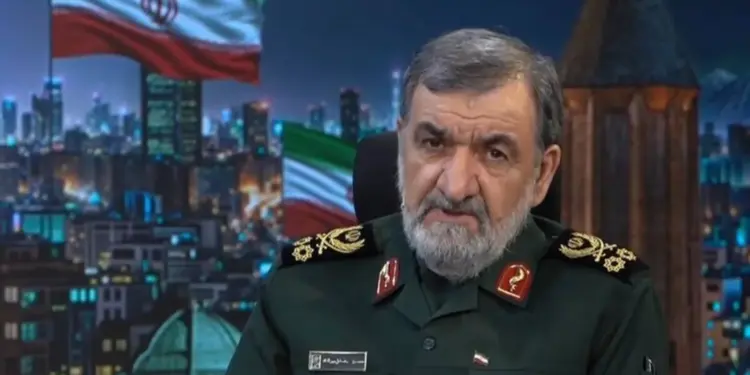
Iran has placed veteran Islamic Revolutionary Guard Corps commander Mohsen Rezaei at the centre of its national security establishment, in a move that signals Tehran is preparing for a prolonged period of confrontation rather than retreat.
Rezaei, 71, has been appointed secretary of the Supreme National Security Council, one of the most powerful bodies in the Islamic Republic, responsible for coordinating security, defence and foreign policy.
The post was previously held by veteran statesman and former parliament speaker Ali Larijani, who returned to the role in August 2025 before being martyred in a US-Israeli airstrike in March this year. Mohammad Baqer Zolqadr then took over the position, serving for less than five months before Rezaei’s appointment.
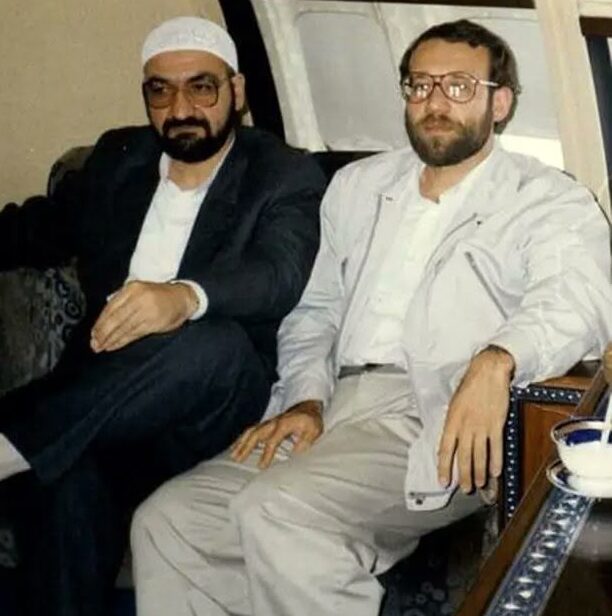
That trajectory has become particularly visible since Larijani’s martyrdom. A position previously occupied by one of Iran’s most experienced political and diplomatic operators has now passed, via Zolqadr, to a former IRGC commander whose formative experience came from directing Iran’s war effort against Saddam Hussein.
Zolqadr has now been appointed political adviser to Supreme Leader Ayatollah Sayyid Mojtaba Khamenei.
Ayatollah Khamenei also personally appointed Rezaei as his representative on the council, citing his “valuable experience” and his record as one of the leading figures of Iran’s eight-year Sacred Defence against Saddam Hussein’s invasion.
In the decree published by the Office of the Supreme Leader, Ayatollah Khamenei thanked Zolqadr for his service and expressed hope that Rezaei would continue serving the Iranian nation as a “mujahid soldier”.
The appointment brings one of Iran’s most experienced military figures back into a decisive security role at a time when the Islamic Republic continues to face intense pressure from the United States and Israel.
Rezaei became commander of the IRGC in 1981 at the age of just 27 and remained in the post for 16 years, leading the force through most of the Iran-Iraq War and overseeing its development into one of the country’s principal military institutions.
His revolutionary activity began before the 1979 Islamic Revolution. As a young man, Rezaei opposed the Shah, was imprisoned by SAVAK and later became involved in the Mansouroun organisation, whose members would go on to occupy influential positions within the post-revolutionary state.
After leaving command of the IRGC, Rezaei remained at the highest levels of Iranian politics, serving for years within the Expediency Discernment Council and later as vice-president for economic affairs under President Ebrahim Raisi.
A wartime figure for a wartime moment
Rezaei’s return to the centre of national security decision-making is particularly significant because of the circumstances surrounding it.
Iran remains in an unresolved confrontation with Washington and Tel Aviv, while pressure continues across the wider region involving Palestine, Lebanon, Iraq and Yemen.
Western coverage has largely framed Rezaei’s appointment as evidence of growing IRGC influence over Iran’s security institutions. From Tehran’s perspective, however, the decision can also be read as a move to place tested wartime experience at the centre of decision-making during a period of continuing military threat.
That shift has become particularly visible since Larijani’s martyrdom.
A position previously occupied by one of Iran’s most experienced political and diplomatic figures has now passed, via Zolqadr, to a former IRGC commander whose formative experience came from directing Iran’s war effort against Saddam Hussein.
Rezaei is not simply a former general. He belongs to the generation that built the Islamic Republic’s military institutions under conditions of invasion, sanctions and international isolation.
His appointment therefore suggests that Tehran is prioritising experience, deterrence and institutional continuity as it prepares for the next phase of confrontation with the United States and Israel.
Health claims come under scrutiny
The appointment also comes amid intense foreign media speculation over Ayatollah Khamenei’s health, with reports claiming that he was critically ill, incapacitated and potentially close to death.
Those claims have been further challenged by President Masoud Pezeshkian, who said he recently held a face-to-face meeting with the Supreme Leader lasting more than seven hours.
Pezeshkian described the meeting as “very good” and said the two discussed many of the most important issues facing the country.
Iranian reports said the discussions included the continuing war, military developments, economic pressures, public livelihoods, management of the rial, foreign currency and energy resources, as well as Iran’s economic relations with other countries.
The lengthy meeting, combined with Ayatollah Khamenei’s appointment of Rezaei to a key national security position, presents a markedly different picture from recent reports suggesting that the Supreme Leader was incapable of carrying out his duties.
Neither development amounts to an independent medical assessment of his condition. But a reported seven-hour meeting with the president involving detailed discussion of military and economic policy is difficult to reconcile with some of the more sensational claims that he was incapacitated or on the verge of death.
Taken together, the developments point to an Iranian leadership seeking to demonstrate continuity and control while restructuring its security establishment for a period in which confrontation with its enemies remains far from over.
Rezaei’s return is therefore more than a personnel change.
It is a signal that Tehran expects pressure to continue — and is placing veterans of its earlier wars at the centre of preparations for whatever comes next.