
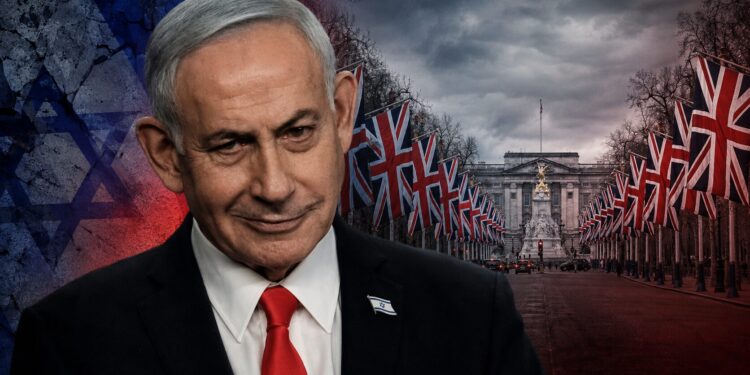
Israeli Prime Minister Benjamin Netanyahu, who is wanted by the International Criminal Court over alleged war crimes and crimes against humanity in Gaza, has been condemned by Jewish leaders in Britain after deriding the country as the “Islamic Republic of Britain”. The remarks have renewed concerns over the increasingly casual use of Muslims and Islam as symbols of national decline. The ICC warrant for Netanyahu remains listed as outstanding.
Netanyahu made the comments during an Israeli podcast while attacking what he viewed as increasingly hostile British media coverage of Israel and its occupying regime.
Referring nostalgically to positive British reporting of Israel during the 1967 Arab-Israeli war, Netanyahu said: “Go find that in Britain today, which you could call the Islamic Republic of Britain.”
He later repeated a joke portraying Britain as potentially becoming the world’s first nuclear-armed “Islamic republic”, before adding that the occupying Israeli regime was ensuring there would not be another one “in Iran”.
The remarks immediately drew criticism in Britain, including from within the Jewish community.
Rabbi Charley Baginsky and Rabbi Josh Levy, co-leaders of the Movement for Progressive Judaism, said they were “appalled” and warned that Netanyahu’s language was dangerous at a time of growing antisemitism, anti-Muslim hatred and social division.
Crucially, they rejected any suggestion that Netanyahu was speaking on behalf of British Jews.
They argued that British Jews were not made safer by rhetoric that denigrated Muslims or presents an entire community as a threat, stressing the responsibility of Jewish leaders to challenge language that fuels prejudice and division.
Danielle Bett of the British Jewish organisation Yachad similarly accused Netanyahu of spreading hateful and divisive rhetoric against British Muslims, while Gavin Barwell, who served as chief of staff to former prime minister Theresa May, described the comments as “blatant Islamophobia”.
When Islam itself becomes the insult
The significance of Netanyahu’s remarks goes far beyond another dispute between Britain and an increasingly isolated Israeli regime.
At the heart of the joke is an assumption increasingly familiar in European political discourse: that describing a country as more Islamic, more Muslim or more influenced by Muslims is inherently a criticism.
Britain becoming an “Islamic Republic” is presented not simply as a change in foreign policy, but as a form of national deterioration.
In such rhetoric, the Muslim is no longer merely someone with whom a politician disagrees. Muslim presence itself becomes evidence that a country has somehow been lost.
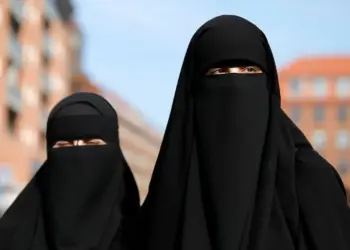
That matters particularly in Britain, where Muslim communities are already facing an increasingly hostile political and social environment.
Netanyahu’s words therefore enter a climate in which Muslims are not debating Islamophobia as an abstract concept. Mosques, Islamic organisations and ordinary families are experiencing its consequences.
Britain’s Muslims as a political scapegoat
The rhetoric is particularly revealing because Netanyahu was ostensibly discussing British attitudes towards Israel.
Rather than simply criticising the British government, journalists or particular political decisions, however, the leader of the occupying Israeli regime invoked Islam.
The implication was difficult to miss: Britain has become insufficiently supportive of Israel because it has somehow become too Muslim.
It reflects a broader attempt to attribute changing Western attitudes towards Israel to Muslim influence rather than recognising that opposition to Israel’s conduct — particularly following the devastation of Gaza — now extends across religious, political and generational lines.
Netanyahu’s own critics within Britain’s Jewish community demonstrate precisely that point.
The people publicly rejecting his comments include Jewish religious leaders and Jewish organisations. Yet the phrase “Islamic Republic of Britain” reduces a complex transformation in public attitudes towards Israel to the supposed advance of Islam.
It turns British Muslims into a convenient explanation for growing opposition to an occupying regime increasingly facing international isolation over its actions in Palestine.
Iran, Britain and the same political language
The reference to Iran is equally significant.
For decades, Israeli officials have portrayed the Islamic Republic of Iran as the central regional threat to Israel. By sarcastically transferring that label to Britain, Netanyahu effectively placed British Muslims within the same political imagery.
Iran and Muslim Britain become rhetorically linked: both are depicted as manifestations of an advancing Islamic threat.
For British Muslims — and particularly communities repeatedly treated with suspicion because of their views on Palestine, Lebanon or Iran — this language has consequences beyond foreign policy.
It reinforces the idea that Muslim political participation is inherently suspect, and that the more influence Muslims exercise within British public life, the less “British” Britain supposedly becomes.
That message is particularly striking coming from Netanyahu, who has himself been subject to an ICC arrest warrant since November 2024. The Court found reasonable grounds relating to allegations of war crimes and crimes against humanity arising from the Gaza war.
A dangerous normalisation
There will inevitably be attempts to dismiss Netanyahu’s comments as humour or political theatre.
But political jokes reveal assumptions about what an audience is expected to find frightening or absurd.
For “Islamic Republic of Britain” to function as a joke, the audience must already accept that Britain becoming more Islamic is something undesirable.
That is precisely why the condemnation from British Jewish leaders is important.
Their response challenges an attempt to present hostility towards Muslims as somehow necessary to defending Israel or protecting Jewish communities. It also underlines an important distinction between British Jews and the policies or rhetoric of the Israeli regime.
The controversy therefore raises a larger question for Britain.
At what point did “Muslim Britain” itself become an insult?
When the leader of an occupying regime, himself wanted by the ICC over alleged war crimes and crimes against humanity, can invoke Britain’s Muslim population as shorthand for national decline, the issue is no longer confined to one offensive joke.
It reflects an Islamophobia sufficiently normalised that Muslim presence itself can be deployed as a punchline — even as Israel’s war in Gaza and occupation of Palestinian territory face growing condemnation around the world.