
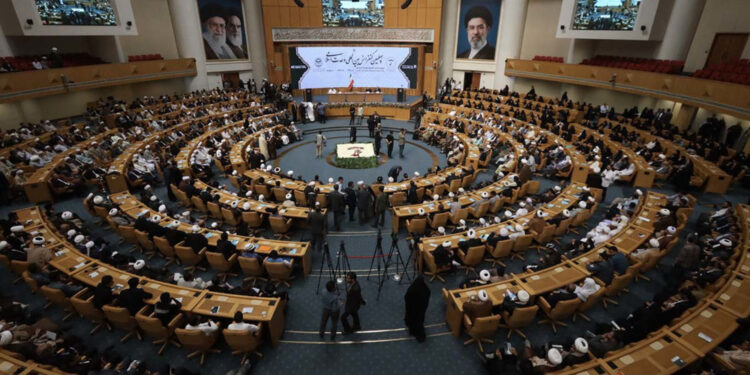
For decades, delegates to Iran’s annual Islamic Unity Conference would gather during Rabi al-Awwal and hear directly from Ayatollah Sayyid Ali Khamenei. This year, for the first time since his martyrdom, scholars from across the Muslim world have returned to Tehran without him — at a conference devoted to the vision of Islamic unity he spent decades promoting.
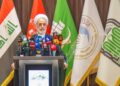
The 40th International Islamic Unity Conference opened in Tehran on Thursday with nearly 600 scholars, religious figures, academics, officials and diplomats from around 40 countries in attendance.
Yet this year’s gathering carries a significance unlike previous editions. It is the first Islamic Unity Conference since the martyrdom of Ayatollah Sayyid Ali Khamenei, whose leadership was closely tied to the institutional development of the project for more than three decades.
The theme chosen for this year’s conference reflects that reality: “Islamic Unity in the Thought of the Martyred Imam, Ayatollah Sayyid Ali Hosseini Khamenei.”
The World Forum for Proximity of Islamic Schools of Thought, which organises the conference, was established by order of Ayatollah Khamenei in 1990 and later assumed responsibility for the annual gathering. For much of its modern history, therefore, the conference developed under his leadership and drew heavily on his conception of Sunni-Shia rapprochement and Muslim political solidarity.
Shaykh Hamid Shahriari, Secretary-General of the World Forum for Proximity, acknowledged ahead of the gathering that this was the first year in which the conference would take place without Ayatollah Khamenei, describing his absence as a source of profound sorrow for those involved in the unity movement.
That absence will be felt most visibly at the conclusion of the conference. In previous years, international guests would meet Ayatollah Khamenei on the 17th of Rabi al-Awwal and hear him address the gathering directly. This year, delegates are expected to travel to Mashhad, visit the shrine of Imam Ali al-Ridha (as), and gather beside Ayatollah Khamenei’s resting place to renew their commitment to the path he championed.
The conference has therefore been structured not simply as a memorial, but as an examination of the intellectual and political legacy he left behind.
Around 360 academic papers were submitted after the conference theme was announced, covering Islamic civilisation, governance, economic cooperation, Palestine, Lebanon, resistance, relations between Islamic schools and the idea of a united Muslim Ummah.
For the first time, the programme also includes a dedicated academic session at the Qom Seminary, while eight new books from the Research Institute for Islamic Proximity Studies are being unveiled.
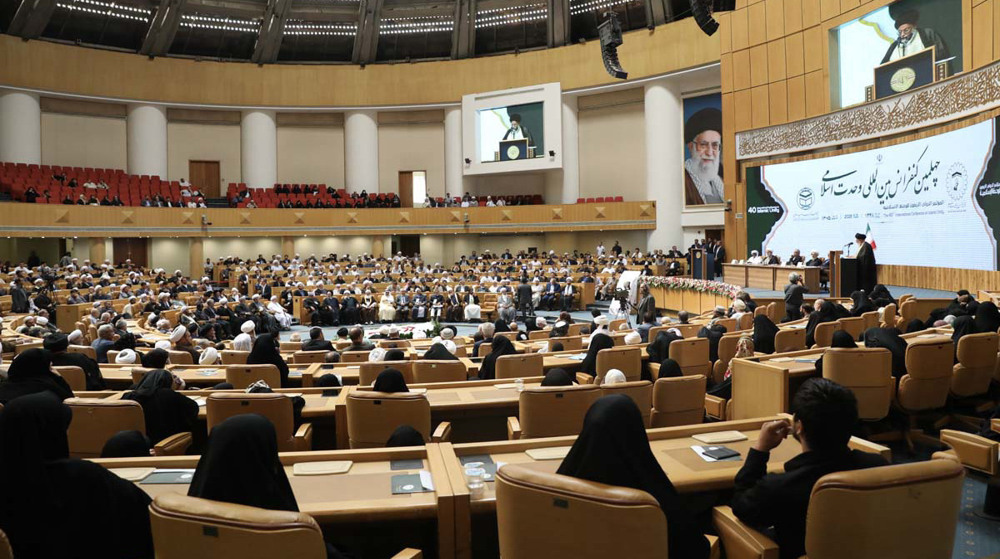
Ayatollah Noori Hamedani: Khamenei was a ‘flagbearer of unity’
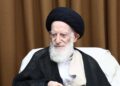
Among the major contributions was a message from Ayatollah Hossein Noori Hamedani, one of the senior maraji of the Qom Seminary, who described Ayatollah Khamenei as a “flagbearer of the unity of the Ummah”.
Ayatollah Noori Hamedani stressed that Islamic rapprochement did not require Shia or Sunni Muslims to abandon their theological identities, but rather to prevent scholarly differences from becoming grounds for hostility, takfir or bloodshed.
He also warned Muslim governments against assuming that American and Israeli hostility was directed solely at Iran, calling such a view “extremely simplistic”.
Any independent Muslim country seeking genuine political strength and freedom from foreign domination, he argued, could eventually face the same hostility.
His intervention linked Islamic unity directly to contemporary regional politics, presenting Muslim solidarity not only as a religious imperative but as a defence against external domination.
Lebanon: unity as a source of resistance
Shaykh Ali al-Khatib, Vice-President of Lebanon’s Supreme Islamic Shia Council, likewise placed the question of unity within the struggle over the region.
After offering condolences over Ayatollah Khamenei’s martyrdom, al-Khatib argued that Iran’s ability to withstand its enemies was connected to the Qur’anic principle of unity.
He warned that internal divisions across the Muslim world had drained resources and weakened the collective ability of Islamic societies to confront outside pressure.
Similar themes appeared in contributions from Sunni and Shia scholars from other countries.
Heba Smith, an activist from Uruguay, described Ayatollah Khamenei’s thought as resting on three interlinked principles: strengthening resistance, consolidating Muslim unity and confronting Zionism, with Palestine and al-Quds remaining central.
Professor Amal al-Husseini of Iraq argued that unity in Ayatollah Khamenei’s thought was not an abstract ideal but a religious obligation and a source of Muslim dignity.
From Afghanistan, Mawlawi Abdulhadi Hedayat described unity as a Qur’anic and strategic necessity capable of limiting foreign interference in Islamic countries.
Shaykh Mansour Mandour, a scholar of Egypt’s al-Azhar, also warned that internal disputes had weakened the Muslim Ummah and strengthened its enemies, particularly in Palestine.
Taken together, the contributions reflected an effort to present Ayatollah Khamenei’s unity discourse not as an exclusively Iranian or Shia project, but as one that had found resonance among Muslim scholars of different traditions.
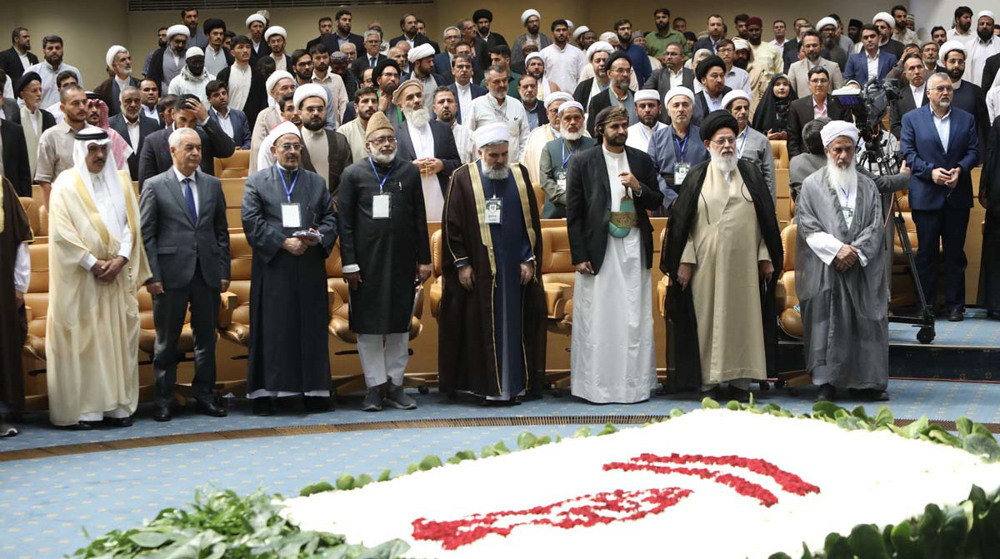
Pezeshkian calls for practical structures
President Masoud Pezeshkian used his contribution to move the discussion towards relations between Muslim states.
He proposed a mutual security and non-aggression pact under which Islamic countries would respect one another’s territorial integrity and refuse to allow their territory, airspace or facilities to be used to attack another Muslim state.
Pezeshkian also called for a permanent mechanism for mediation and conflict prevention within the Muslim world, together with deeper economic and scientific cooperation among the 57 members of the Organisation of Islamic Cooperation.
He stressed that such unity did not require Muslim governments to adopt identical foreign policies or form a single military alliance, but said no Muslim state should seek its own security through the insecurity of another.
His proposals gave a practical political expression to one of the central ideas repeated throughout the conference: that Islamic unity must eventually move beyond declarations and take institutional form.
A conference shaped by absence
Islamic Unity Week itself dates back to Imam Ruhollah Khomeini’s initiative to mark the period between the 12th and 17th of Rabi al-Awwal — the dates associated in Sunni and Shia traditions with the birth of the Prophet Muhammad (s) — as an occasion for Muslim solidarity.
Ayatollah Khamenei subsequently spent more than three decades developing that principle through institutions, scholarship and political advocacy.
The 40th conference is therefore both a continuation and a moment of transition.
Its discussions have ranged from sectarian relations and resistance to economic cooperation and regional security, but the symbolism of the gathering remains difficult to miss.
In previous years, foreign delegates travelled to hear Ayatollah Khamenei speak.
This year, they will travel to his grave beside Imam al-Ridha (as).