
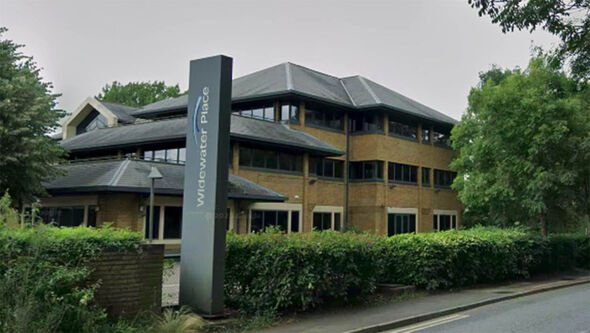
One of Britain’s largest Shia Muslim communities is facing organised opposition and planning difficulties over plans to establish a major Islamic centre in Harefield, west London, with local residents and politicians campaigning against the development.
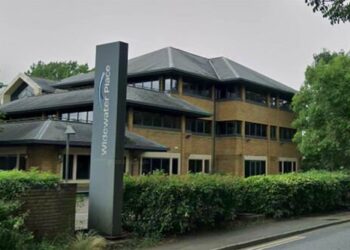
The Khoja Shia Ithna-Asheri Muslim Community of London (KSIMC), widely known as Hujjat, acquired the 6.3-acre Widewater Place property in 2022 with ambitions to develop a major religious, educational and community complex.
The organisation, which operates the Husaini Islamic Centre in Stanmore, hopes to accommodate its growing congregation and expand facilities for religious gatherings, education and community activities.
However, the project has encountered resistance from local campaigners, residents’ associations and Conservative representatives, who argue that the development would place excessive pressure on local infrastructure and alter the character of Harefield village.
A Historic Shia Community Seeking to Expand
Hujjat belongs to the Khoja Shia Ithna-Asheri community, whose origins lie in the Indian subcontinent, particularly Gujarat. During the nineteenth century, a significant section of the Khojas embraced Twelver Shia Islam, later establishing thriving communities across East Africa, including Tanzania, Kenya and Uganda. Migration during the twentieth century brought many to Britain, where they established mosques, religious schools and charitable institutions. Today, the Khoja community maintains an extensive international network dedicated to preserving the teachings of the Ahlulbayt (as).
Hujjat has served as one of Britain’s principal Shia Islamic institutions for decades, hosting major religious gatherings during Muharram, Ramadan and other occasions.
Harefield Already Hosting Islamic Research and Community Activities
Despite the planning difficulties, Hujjat has already established a range of commercial, educational and community activities at Harefield.
The site accommodates office tenants and a co-working facility known as FUTR, alongside business events, exhibitions and community programmes.
It also houses the International Centre for Advanced Islamic Research (ICAIR), established by the World Federation of Khoja Shia Ithna-Asheri Muslim Communities. The institute brings together traditional Hawza scholarship and contemporary academic research, organising lectures, seminars and international conferences.
Harefield has hosted academic gatherings involving prominent Shia scholars, including Ayatollah Sayyid Muneer al-Khabbaz, as well as meetings of the World Federation.
In July 2026, the premises hosted Echoes of Karbala, a two-day exhibition commemorating the martyrdom of Imam Hussain (as), featuring educational displays and family activities.
However, Hujjat has yet to secure the necessary planning permission for regular congregational prayers and religious gatherings.
During an annual general meeting, a Hujjat executive explained:
“One thing that we need a change of use of is for us to hold our Majalis and our Salah.”
Residents Campaign Against Mosque Development
Opposition has been led by groups including Harefield First and the Harefield Tenants and Residents Association, alongside local Conservative representatives.
Harefield First has described the proposed development as an “attempted invasion of 6,000 people into Harefield”, claiming that large numbers of worshippers would overwhelm local roads, parking and public services.
Local Conservatives have also launched a campaign entitled Stop Widewater Place, declaring:
“We the undersigned believe the proposals put forward by KSIMC of London (Hujjat Stanmore) are completely wrong for Harefield.”
Campaigners have raised concerns about traffic congestion, noise, late-night activity and the scale of the development.
While such concerns are legitimate planning considerations, the language employed by some opponents has raised questions about whether resistance extends beyond practical objections to the presence of a large Muslim community.
Council Restrictions and Financial Challenges
Hujjat’s plans have been complicated by the need to secure change-of-use permission from the London Borough of Hillingdon.
Although the organisation owns the property, existing permissions do not automatically authorise regular congregational worship.
In 2024, one planning application relating to residential conversions at Widewater Place attracted 234 objections. Despite opposition, Hillingdon Council approved three residential conversion applications in August that year, although these did not extend to religious use.
The project also carries substantial financial commitments. In September 2025, Hujjat held a special general meeting to consider proposals to redevelop Musgrave House, part of the Harefield estate, into residential flats.
The leadership has sought to refinance existing obligations while protecting the established Stanmore Islamic Centre from being used as security for borrowing.
Previous Golders Green Mosque Controversy
The Harefield dispute recalls an earlier controversy involving the Golders Green Hippodrome, purchased by a Shia Muslim charity in 2017 for £5.25 million with plans to establish an Islamic centre.
The proposals attracted thousands of objections, with residents citing traffic, parking and noise concerns. However, some opposition included explicitly anti-Muslim rhetoric, prompting condemnation from religious leaders.
Nearly 30 representatives from different faith communities issued a joint statement declaring:
“As clergy and faith representatives we unanimously deplored and condemned the hostile and, at times, racist response to the new Islamic centre’s opening.”
Despite efforts to address local concerns, the project became entangled in planning disputes and legal challenges. The building was eventually sold to Hillsong Church in 2021, ending the Shia community’s ambitions for the site.
Religious Freedom and the Future of Harefield
The difficulties facing Hujjat highlight the broader challenges Muslim communities encounter when seeking to establish or expand places of worship in Britain.
While residents have the right to raise legitimate planning concerns, religious organisations are equally entitled to seek permission for suitable facilities without facing discrimination.
The language used by some Harefield campaigners has raised concerns about whether opposition to the development is being driven solely by planning considerations.
For Hujjat, Harefield is already functioning as a centre for Islamic scholarship, education and community activities. However, its central ambition of establishing a fully operational religious centre remains dependent on securing planning approval.
The outcome could carry wider implications for Shia Muslim organisations seeking to develop religious and community infrastructure across Britain.